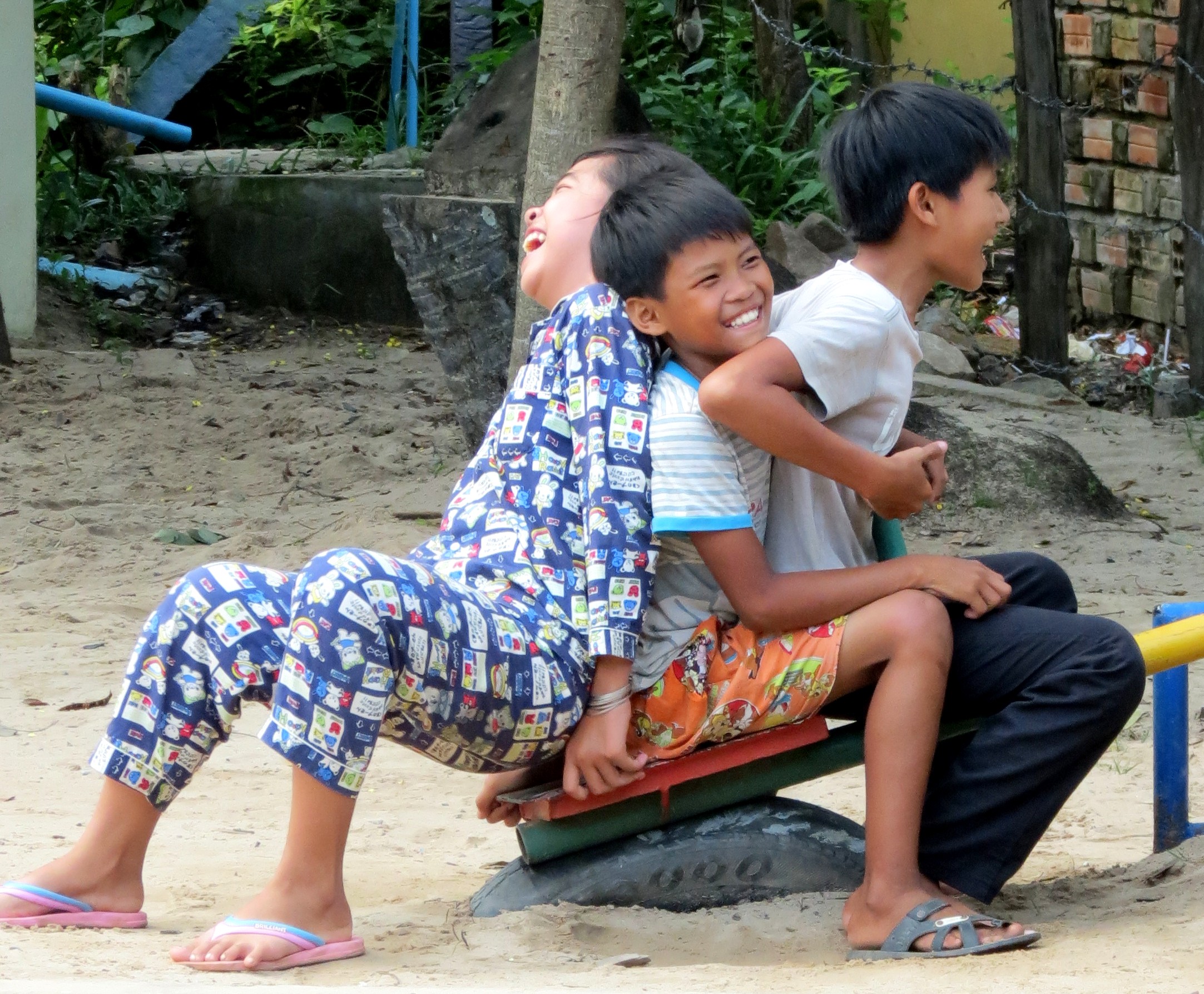
Since the concept of a language school at Chumkriel first took root – and from less than humble beginnings with Mr Thy, a desk under a palm tree and six students – the Chumkriel Language School (CLS) as we know it today is a thriving hub of educational and social activity.
With the support of Rotary, CLS now offers not only English language classes (its core business) but a range of educational activities and programs for the students and for the wider community of Chumkriel.
Here’s a quick overview:
The Computer Project: This project offers students and people from the community the chance to learn how to use the internet and Microsoft Office. Students learn to type in both English and Khmer. This helps to provide access to the kind of information we all take for granted these days. Visiting Rotarians and volunteers from Dubbo have helped to set up this project by providing computers and expertise. Access to computers also allows staff to keep in touch with donors and other organisations and to gather information and expertise as CLS grows. I have spent most of my time here on this visit helping Phoas and Mr T and the teachers to prepare a template for their monthly reports and quarterly newsletter.
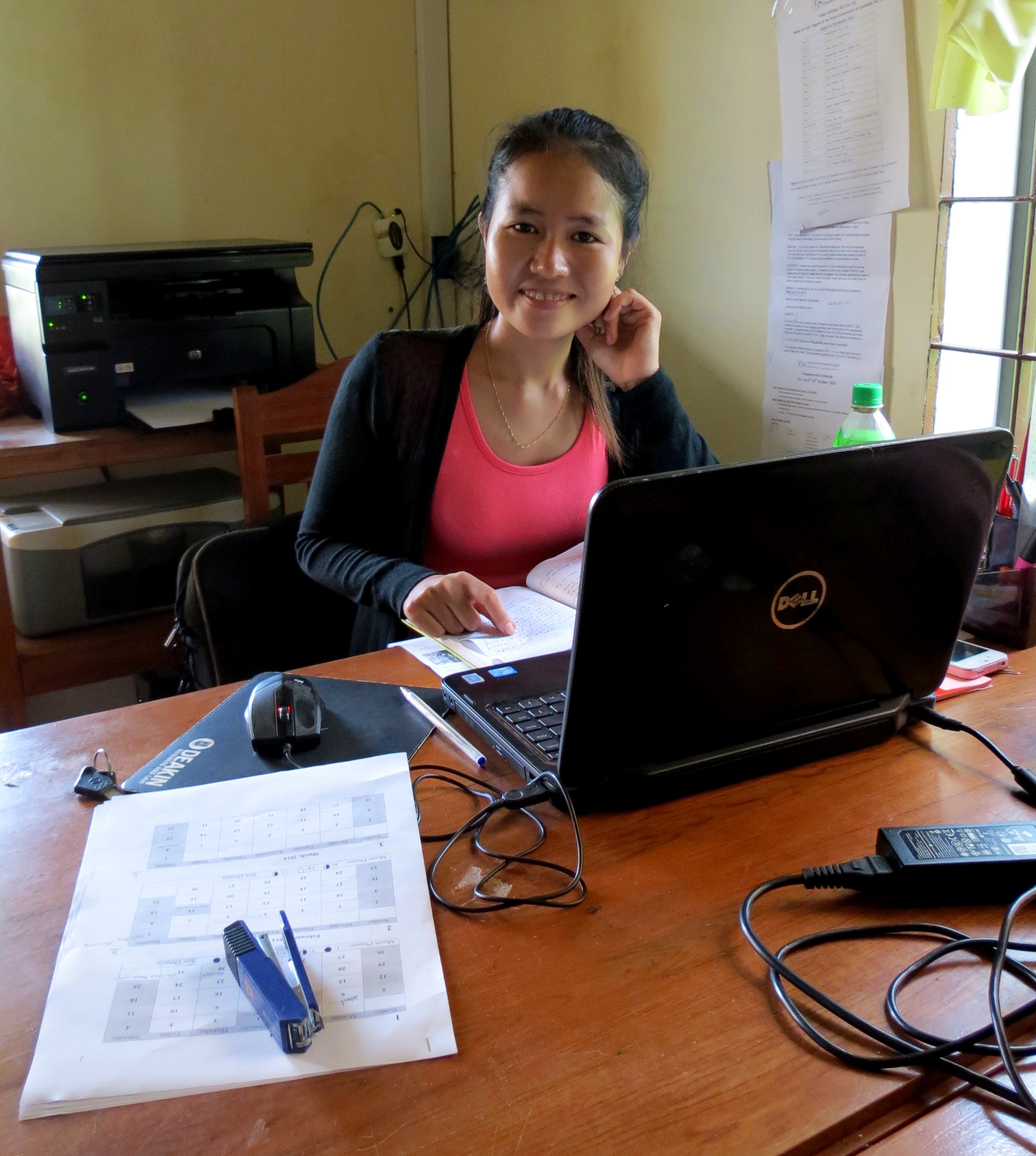
Community Focus Class:
CLS supports poor and at-risk students from the Chumkriel region to complete primary school and continue their education. Classes include English, Khmer, art, craft and physical education. Two classes consist of students who will study at CLS long term, beginning in Grade 2 or 3. Students complete the course in three years. CLS also makes these classes available to all students from the Chumkriel State School. Both long and short term educational opportunities are provided.
Evening School:
The Evening School offers affordable English language classes for children and adults throughout the Chumkriel area. By learning English, students have a better chance of finding employment and continuing their education. There are currently seven teachers, who take 14 classes, which are held week nights between 5-7pm. State Schooling in Cambodia is free, but many families are unable to meet the extra costs of educating their children, for instance providing supplies like books and pens and school bags, and also school uniforms (which are compulsory). CLS has identified a number of students to whom it provides a “scholarship” in the form of assistance with these items.
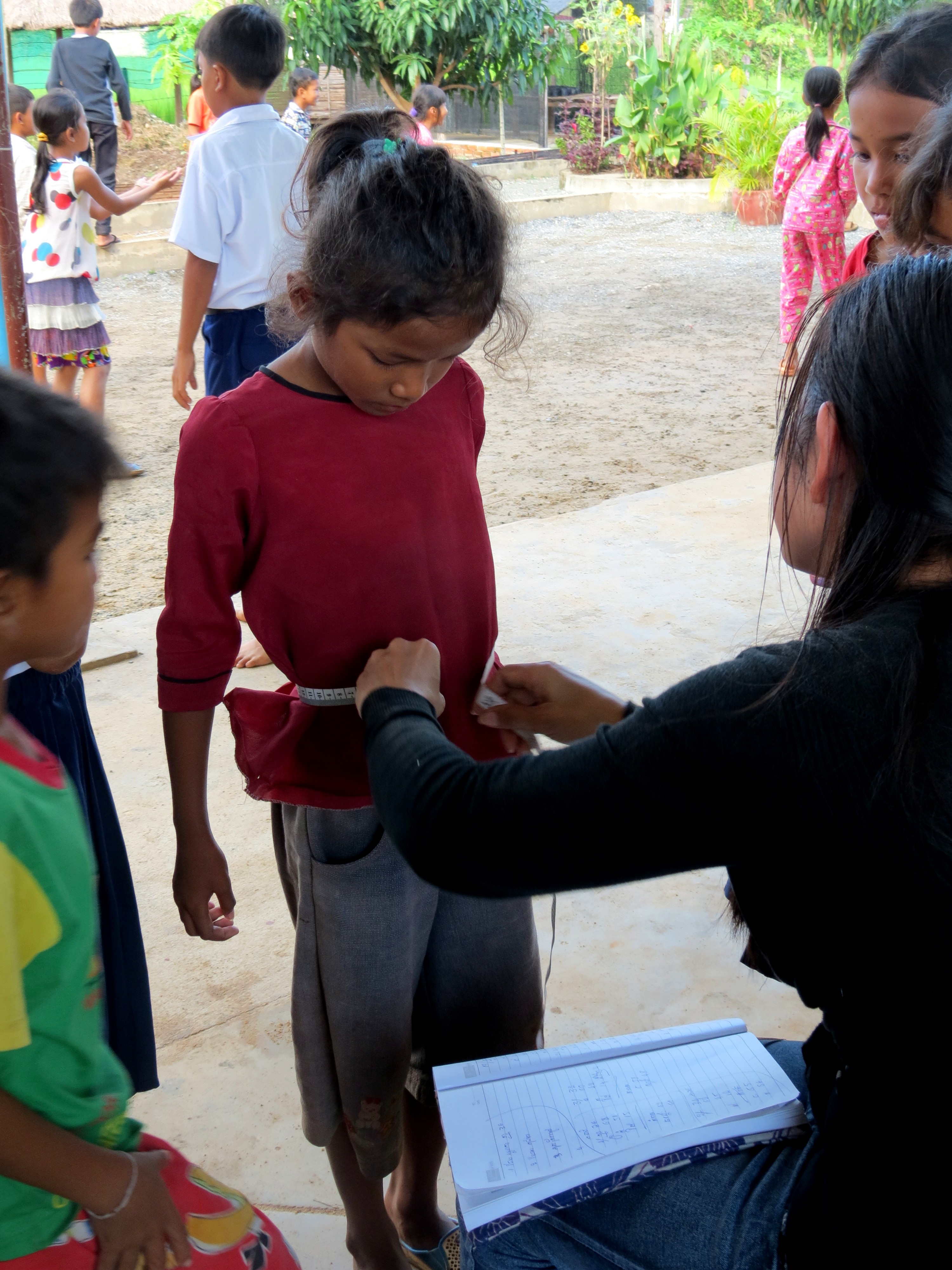
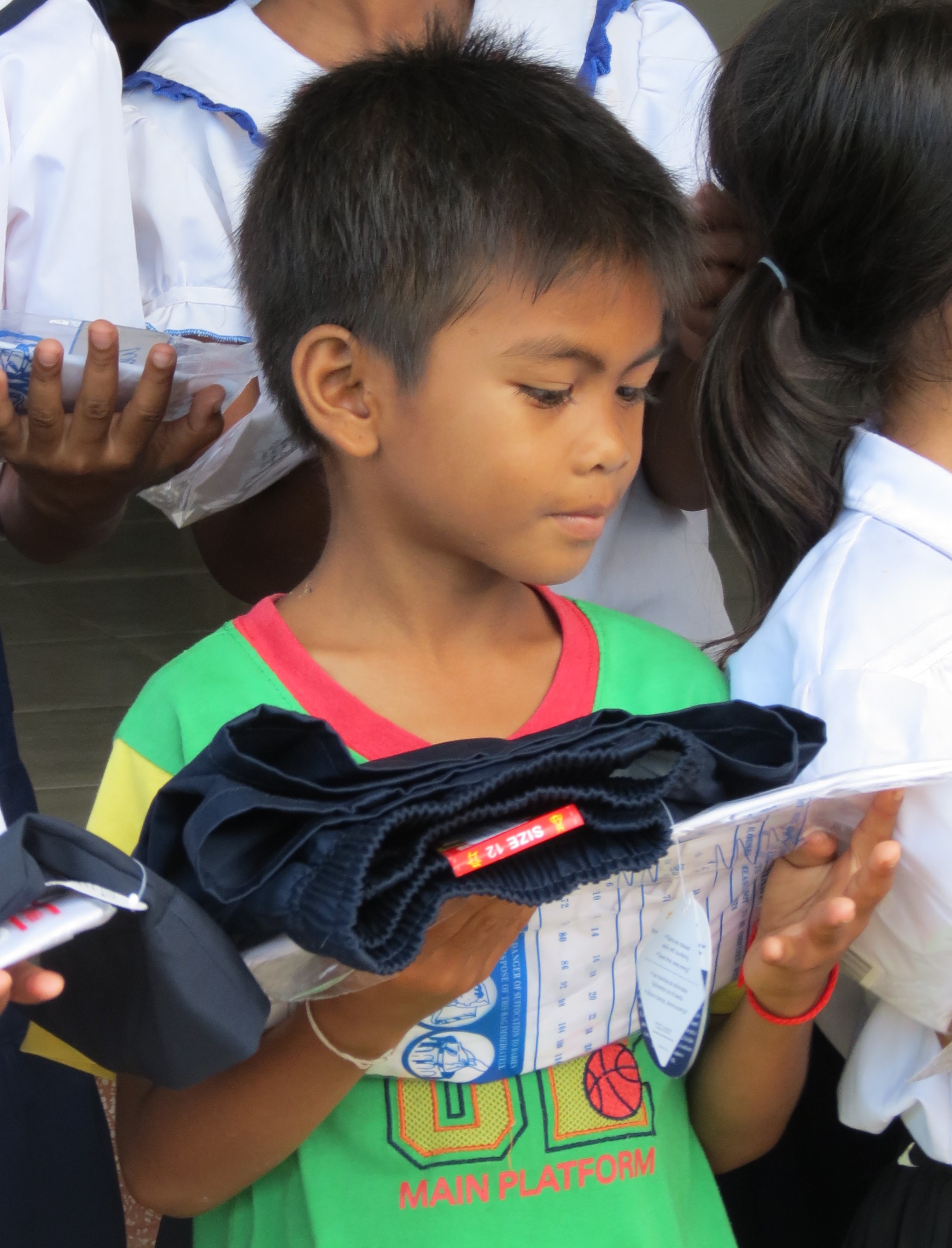
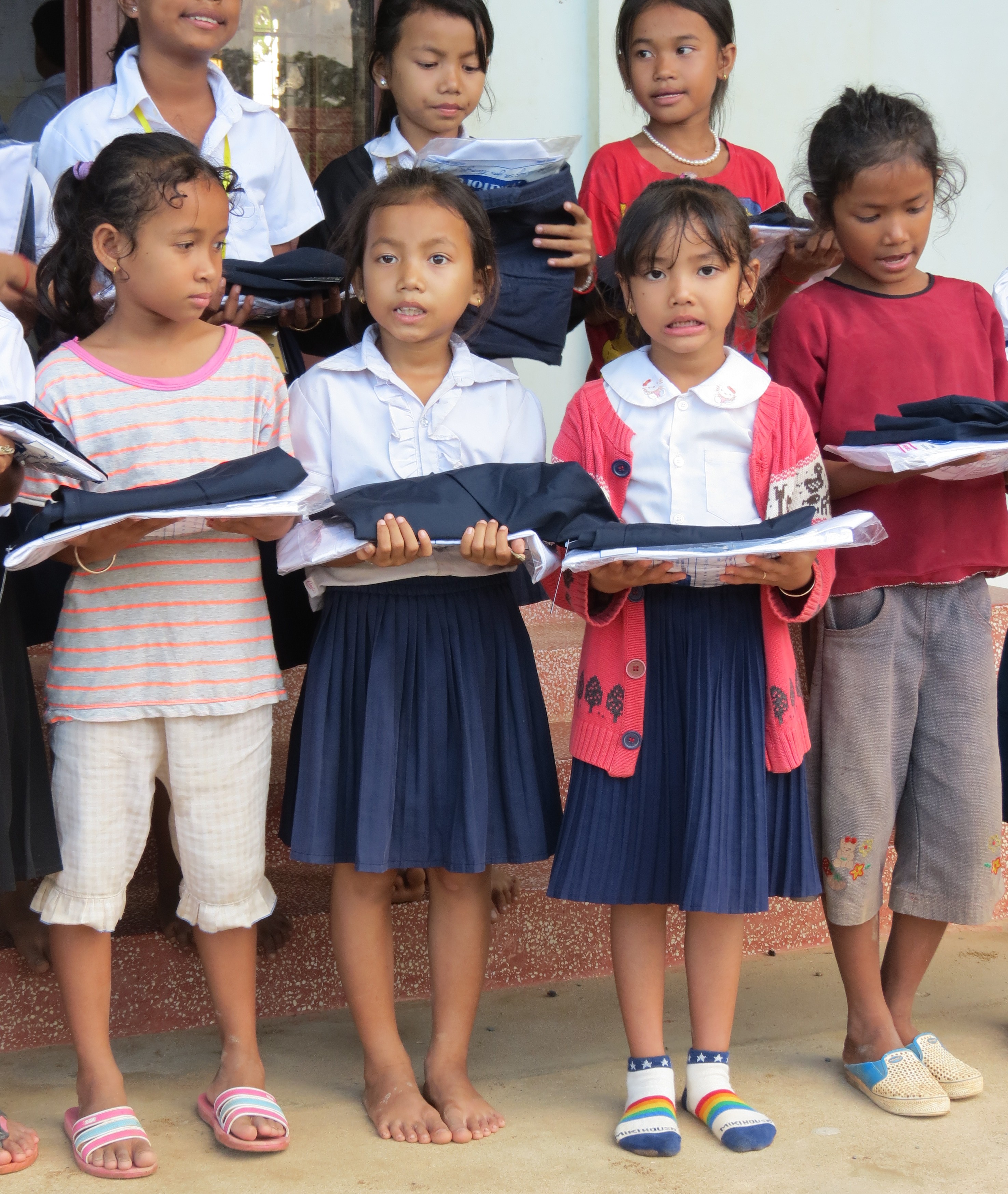
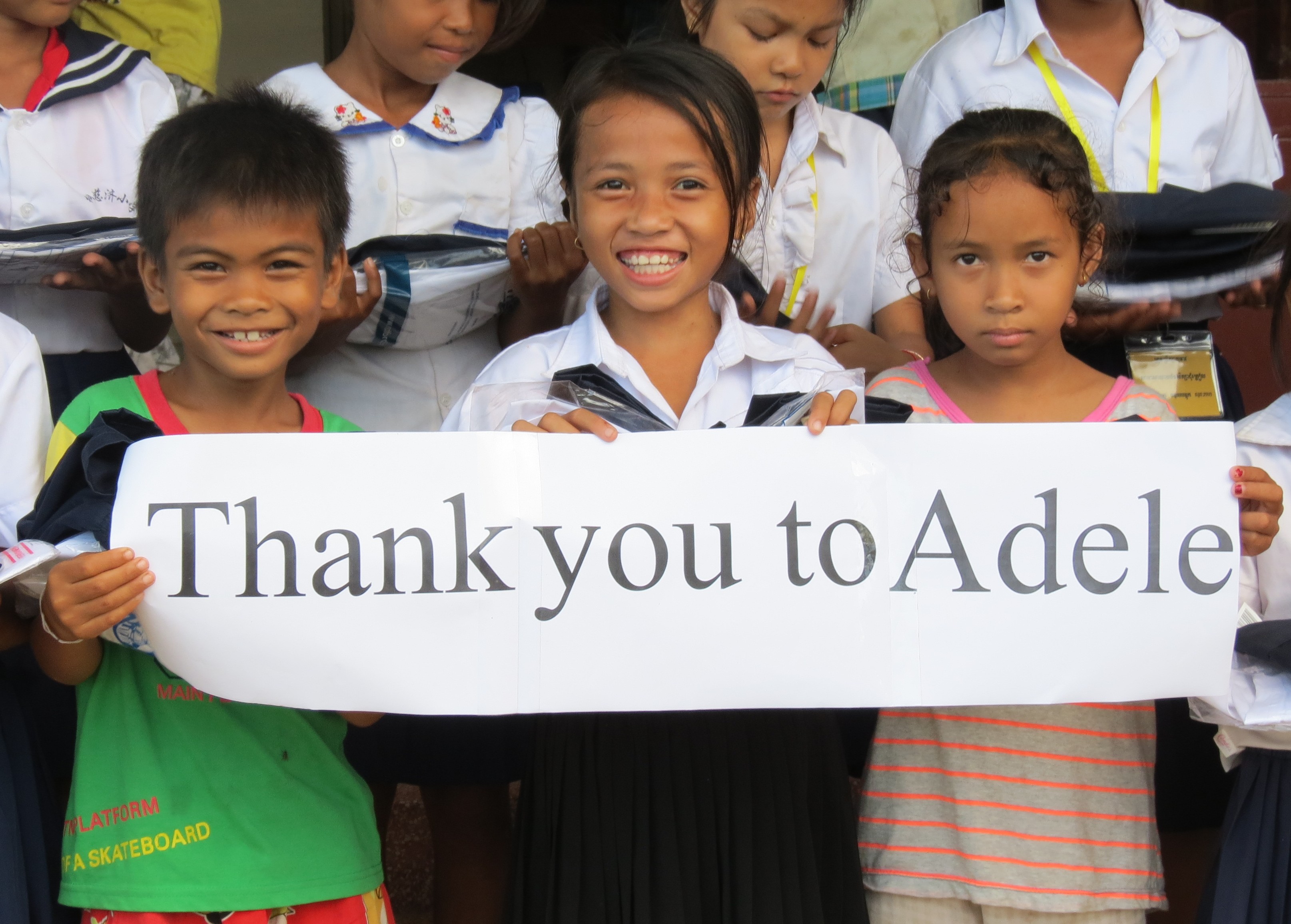
We were delighted during this visit to bring with us an extraordinarily generous donation from Dubbo businesswoman Adele Oulton, who supplied dozens of brand new white shirts, navy skirts and navy school pants and shorts for the scholarship students of CLS. The delight on their faces was worth hauling the two massive bags all the way from Oz. Thank you a thousand times over to Del for her incredible generosity. These children rarely, if ever, get anything new – and to see their little faces light up at being given these pristine clothes (all still in their plastic and with tags attached) was beyond priceless. Some of the shorts and skirts were a tad large (these little poppets are minute) so local social enterprise, Dorsu (which is a tailoring/sewing business that employs and teaches locals to sew) helped by altering the garments to fit.
The Salt Field Project:
This project assists children who are living and working at Chumkriel’s salt fields, to attend the State School. Families who live around and work at the salt fields are some of the poorest at Chumkriel, and are not able to afford to send their children to school. This is not only because of the cost associated with school, but because the children are needed to work in the salt fields, which are also quite a long way (by Cambodian standards) from the school. Parents are also (formally) uneducated, and do not recognise the value in education for their children. CLS works in concert with the State School, local authorities and other organisations to help provide equal access to education for these children – CLS provides help with transportation (there is now a bus – which is beginning to show the ravages of rust from travelling across the salt fields every day) – and also with the provision of school supplies for the children, all while aiming to increase the awareness of the importance of education.
The Library Project:
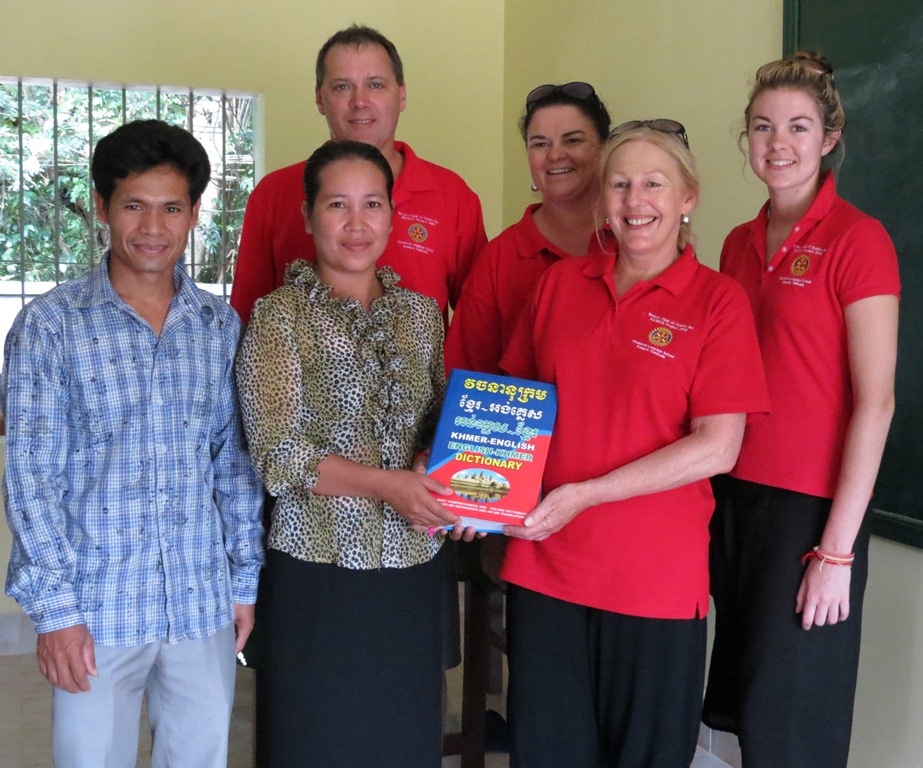
Established with the support and financial assistance of the Rotary Club of Dubbo Macquarie, after member Glenys Mulholland visited CLS in 2011, the Library has gone from strength to strength, and is a very valuable resource for CLS. The books and resources are provided free for the use of students and people from the community. Library classes are held, and there is often a teacher available to help people from the community with their reading. During last year’s visit, our team made had a book-buying trip in Kampot (and in Phnom Penh for those books we couldn’t source locally) to purchase English and Khmer text books and resources to stock the library. We also donated some of these books to the State School, because the students of CLS benefit from the sharing of resources.
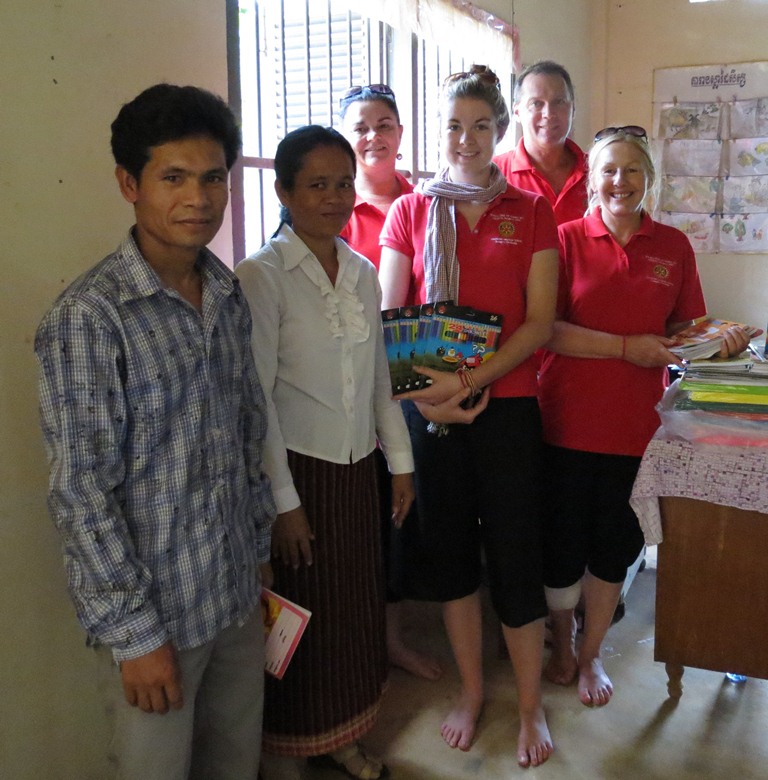
Presentation of books
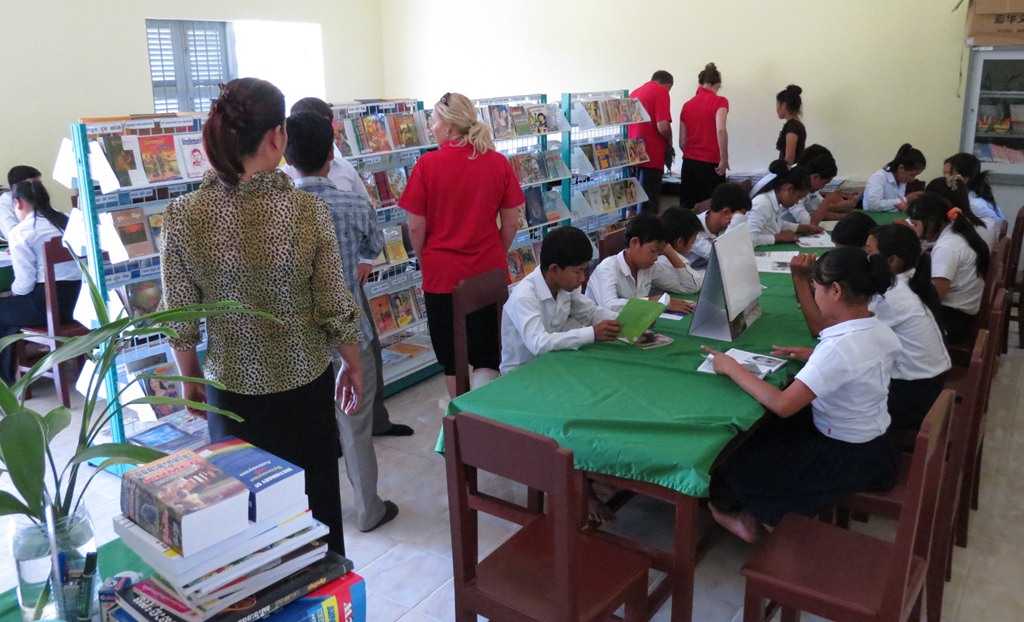
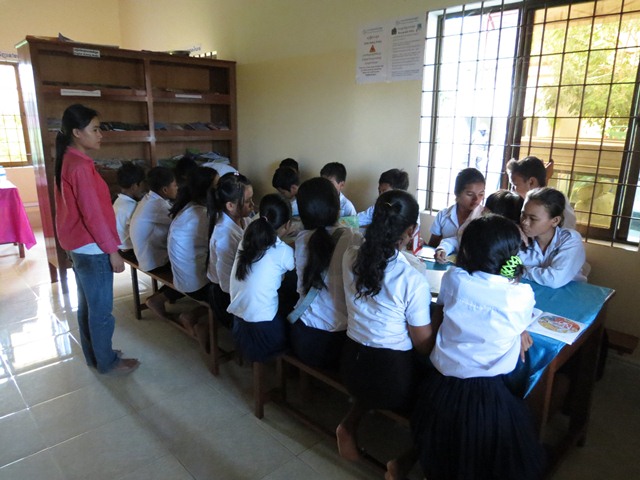
CLS Library – 2012
The Agriculture Project:
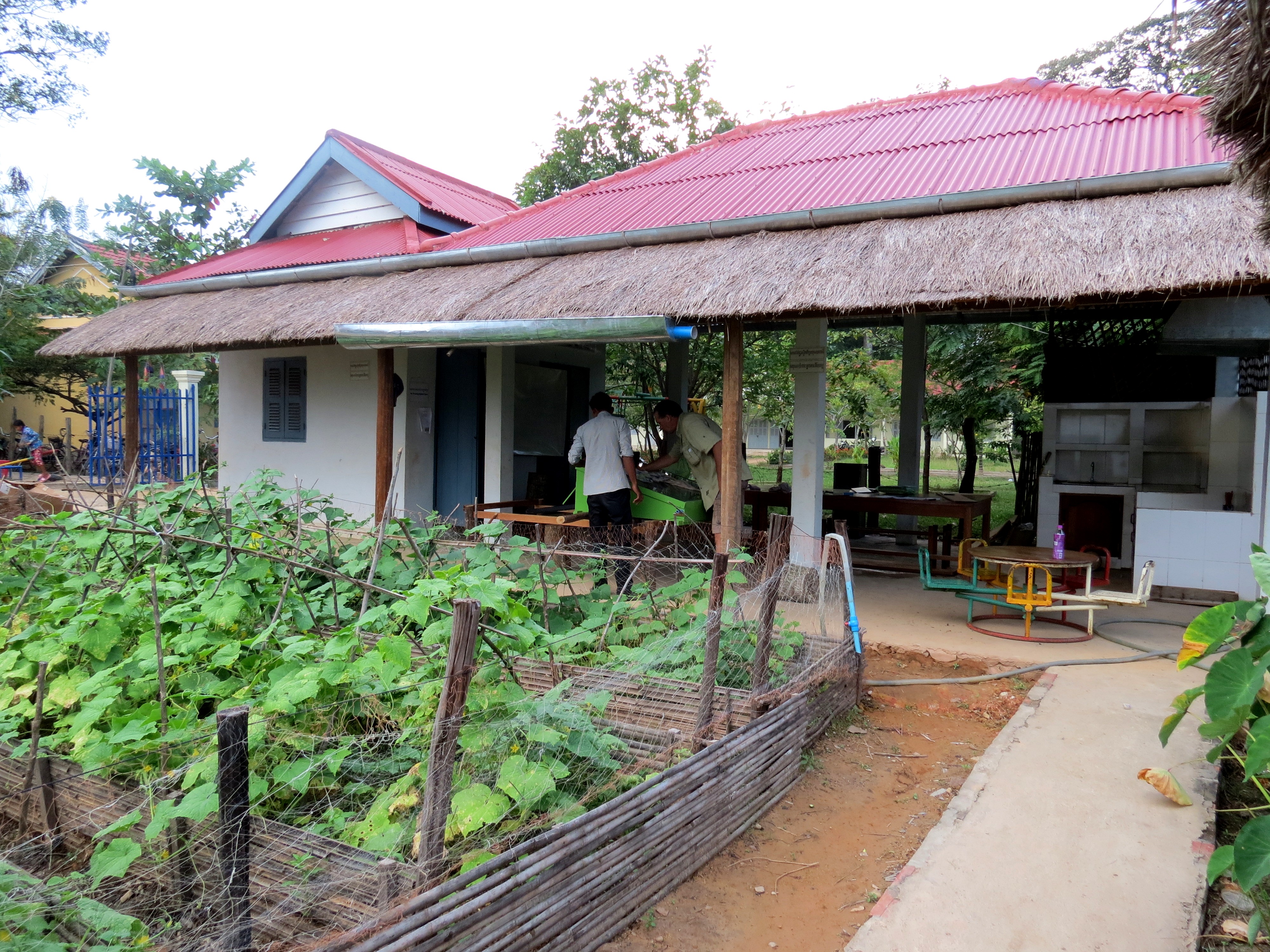
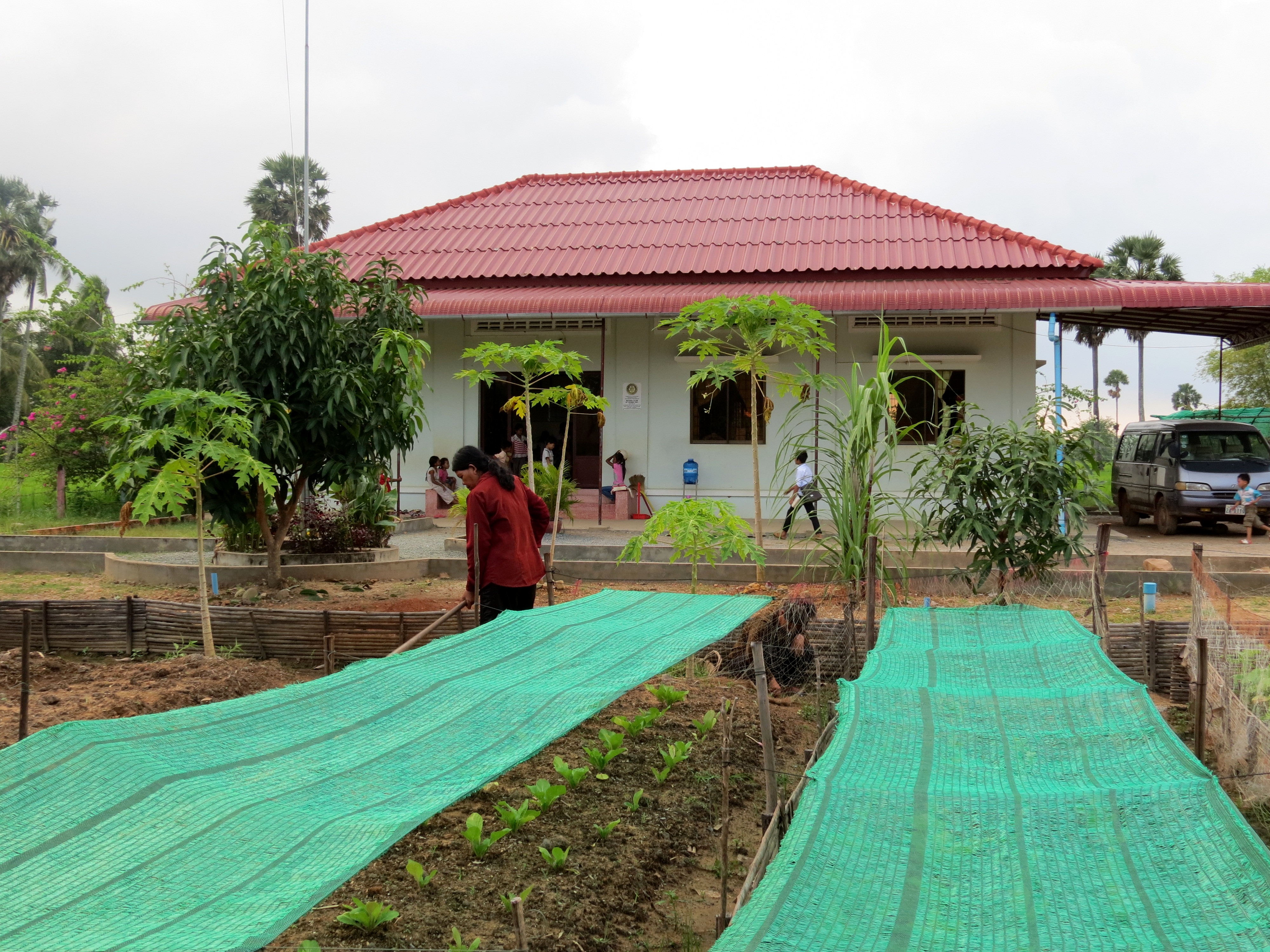
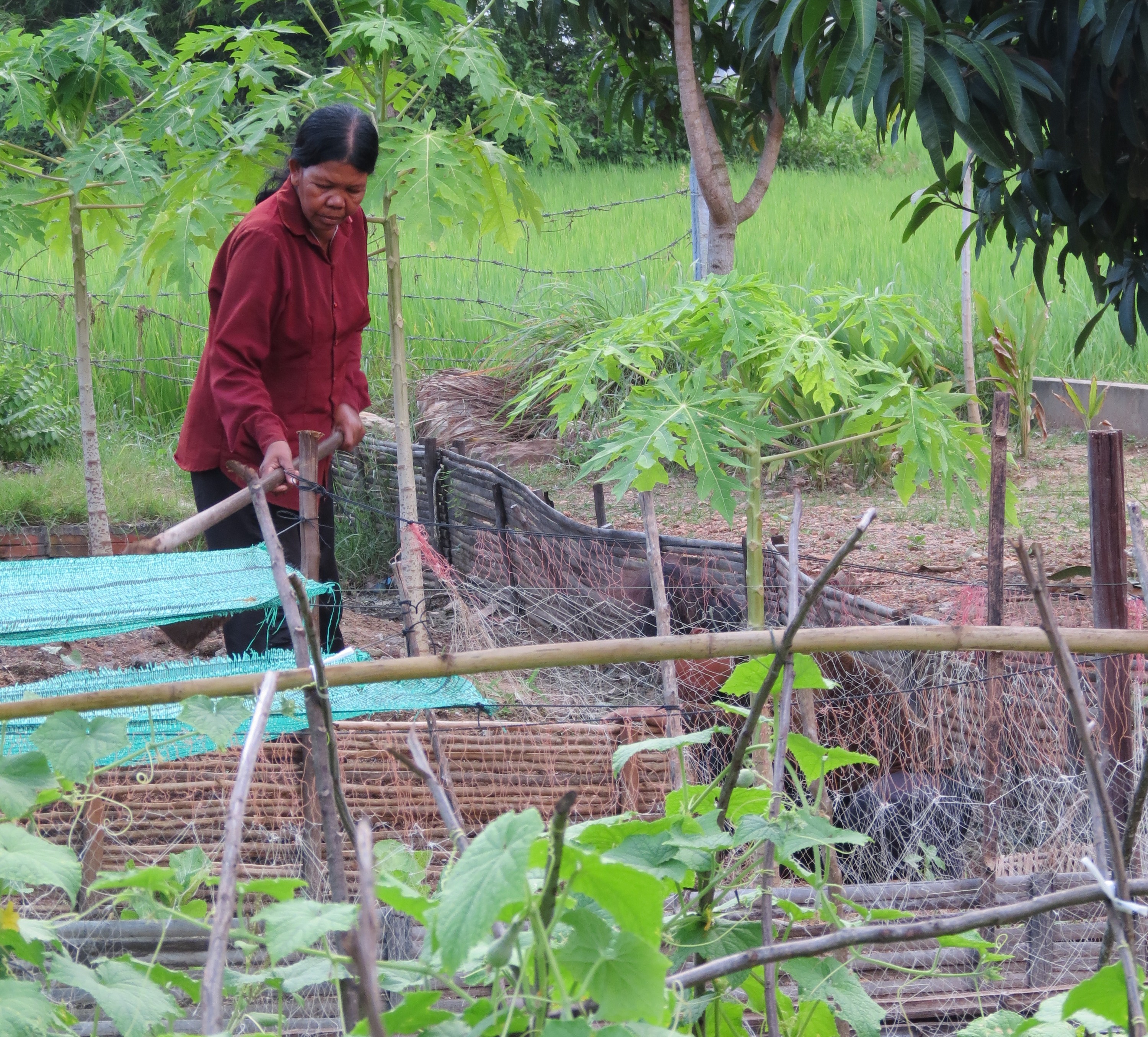
Being from the bush, an’ all, we have been particularly thrilled with the progress of the agriculture project and plot at CLS, which is lovingly tended and co-ordinated by Sony, one of CLS’s wonderful teachers. This past few weeks has seen a bumper cucumber crop – and I swear you can almost hear them growing! The vegetables (the plot is also growing Chinese radish and some carrot-like vegetables, with tomatoes planned when they come back into season) are used to help supply the Soup Kitchen Project (see below) and it’s hoped to eventually grow enough to sell some for profit in town. Sony spent some time last week hawking the cucumbers around town to some of the restaurants – which was terrific motivation. All the vegetables are grown organically. The compost is made by local volunteers who come to the school and mulch up all manner of organic material they find around the community – this is then turned into compost and used on the furrows. Sony tells me he has used the resources in the library and on the internet to research ways to grow organic vegetables and make his own natural pest repellants. Eventually, Sony would like to extend this project to teach students and community members about organic farming practices.
The Soup Kitchen Project:
Some families are so poor they are unable to feed their children properly, which in turn affects school attendance and learning. CLS provides a nutritionally balanced lunch to 30 students five days a week. The students and their parents are also given information about eating well even with minimal resources, and CLS also helps with medical assistance where necessary. As I mentioned, the agriculture plot helps to provide ingredients for the soup kitchen.
Health and Hygiene:
Way back when the CLS project first began, one of the first activities the Rotary volunteer team did was to conduct some basic “wash your hands” classes. From that small gesture, the CLS hygiene project has grown and is now a formal and important part of the overall provision of education at the school. CLS provides the children with toothbrushes and toothpaste and teaches them how to use both, along with helping those in need to access dental care. Part of the program is teaching children how their health is related to the environment. Lessons about cleaning up rubbish are also taught (it’s a slow and steady battle!).
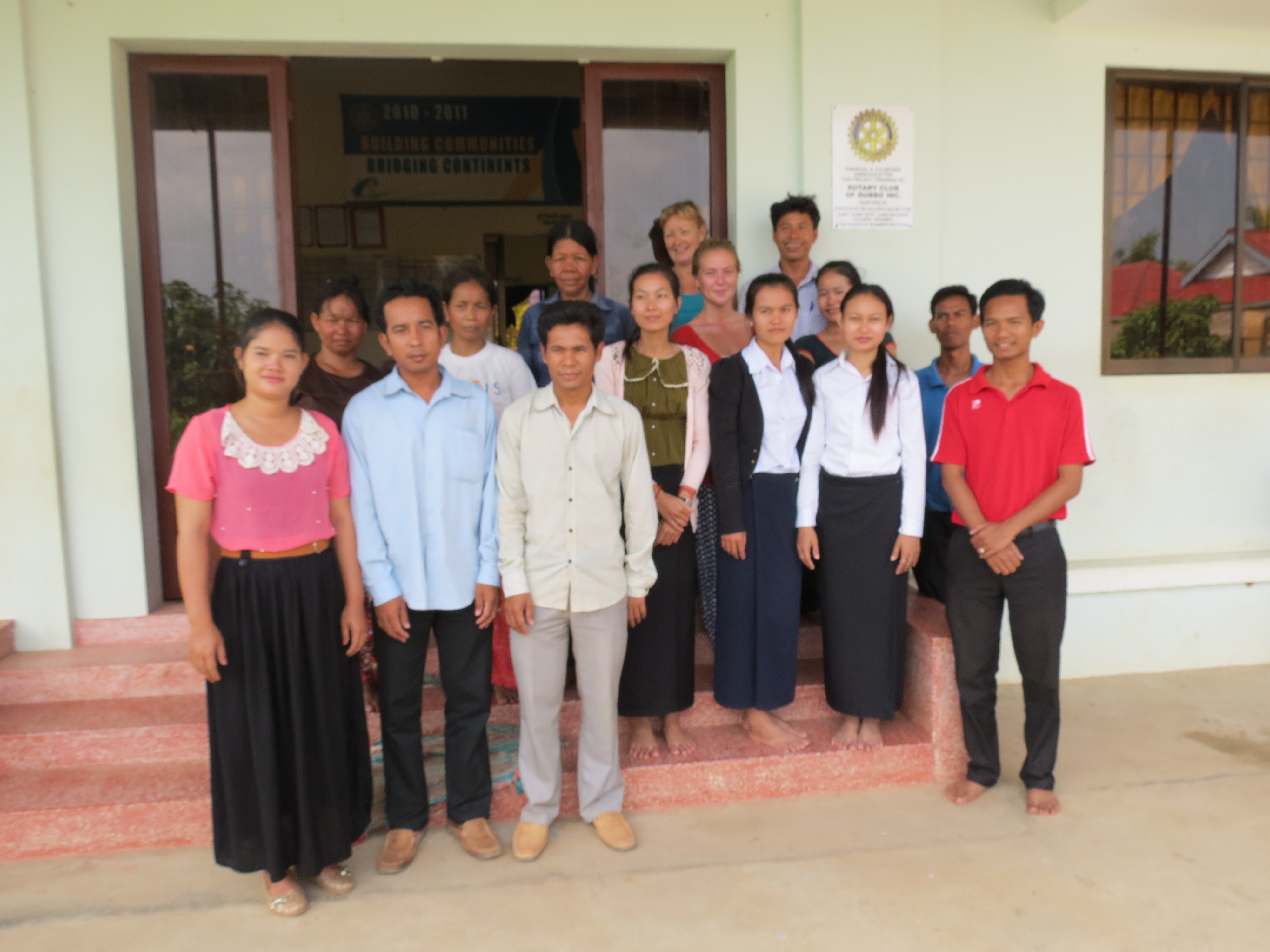
Although Rotary and now other organisations have been instrumental in the progress of CLS, it’s thanks to some very dedicated local Khmer people that it is now a sustainable and professional organisation – leading that charge is the inimitable Mr T (Thy Sothy) whose dream it was in the first place. The man is extraordinary – and his is the smile that sealed a hundred funding deals! We are honoured, proud and humbled to have been part of what CLS is today and what it will be in the future.

 Jen Cowley