
Good advice
It’s been way too long between drinks, but I think it might be time to fire up the keyboard again.
I know at least ONE person is still out there (thanks, S-E!) so maybe it’ll just be me and my one buddy whistling into the wind, but that’s never stopped me before.
Stay tuned…

This just in: Cambodia’s a pretty wet country…
The mighty Tonle Sap disects the country, and in the central north region of Cambodia – around Siem Reap – the Tonle Sap Lake bursts its banks every year during the wet season, turning the flood plains into a giant extension of itself. During this time, the 4000 villagers who live on the floodplain move from rice farming to fishing, but apart from moving their cattle to higher ground, remain living in their stilt homes – accessible by boat only. They’ve also turned their unusual circumstances into a tourist destination. We were among those tourists.
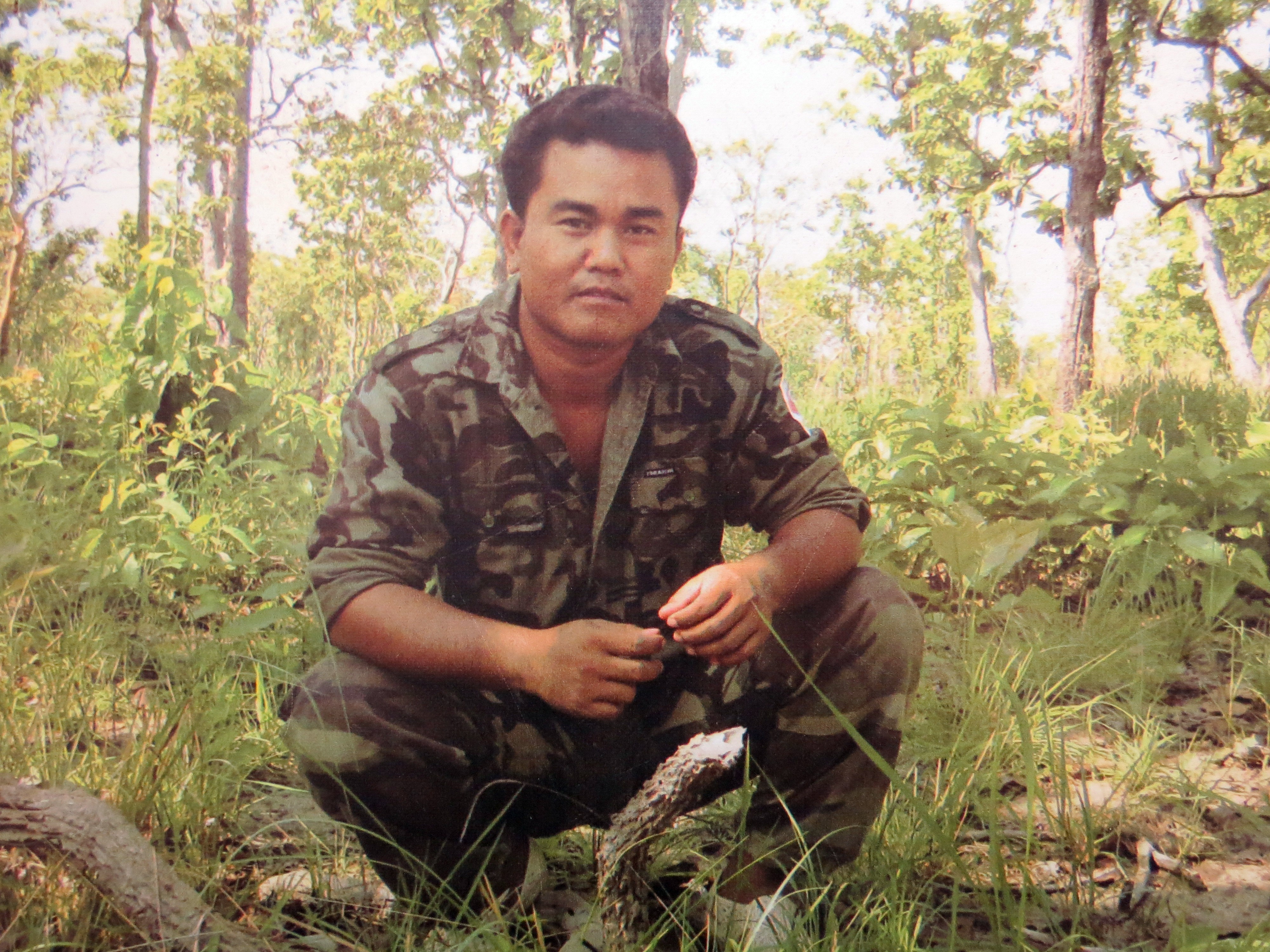
Before leaving Siem Reap, we took a morning’s tuk-tuk ride out to the countryside to visit the Land Mine Museum – set up by a former child soldier, Aki Ra, who has dedicated his adult life to the quest for a land-mine free world. His is a fascinating story – he thinks he was born in 1970 and lost his parents to the Khmer Rouge’s murderous rampage when he was just five. He went to exist (it’s not right to say “live”) in the KR camps, and was soon drafted as a child soldier – first with what remained of the the Khmer Rouge forces after the Vietnamese occupation, then as a soldier with the Vietnamese Army. He would later be drafted to the Cambodian Army. He says that for the first 20 or so years of his life, he knew nothing but war, and killing, and violence.
During those years, he learned a great deal about land mines – how to set them and defuse them – and about their lethal and tragic consequences. His expertise brought the attention of the UN – which enlisted his services as a de-miner. Over the years, he had collected a great deal of memorabilia from the wars – particularly with relation to land mines – and soon hit on the idea of turning his collection into a museum to help educate people on the scourge of this especially cruel tool of war.
Today, Aki Ra’s museum is also a humanitarian enterprise that helps retrain those affected by landmines, including many, many children. The compound houses an orphanage and school (all completely above board and kosher – unlike so many in Cambodia) and he continues his work with helping to de-mine not only Cambodia, but other trouble-spots throughout the world. Just nine days before we visited, a 15 year old boy lost both hands when he picked up an unexploded land mine in the province of Battambang – near the Thai/Cambodia border.
While most countries in the world have stopped using land-mines, and have signed an international treaty to that effect (including Australia) the United States is still to put their mark on the treaty. At the museum, we met an American ex-pat (a former teacher) who began as a donor to the cause, and now lives in Siem Reap and acts as a guide at the museum, and one of the drivers of what is now an extensive humanitarian/educational project. He told us that “Clinton couldn’t, Bush wouldn’t and Obama hasn’t”. At first, it was grating and unnerving to hear the broad American accent booming out from one of the museum’s rooms – talking about the horrors of wars and landmines (but hey, drones are okay, no?) – but after speaking with him for quite a while afterwards, we found him an interesting, knowledgeable and very dedicated soul with a good heart and a realistic grasp of both history and the fine balancing act between aid and welfare.
I’m hoping to do an article further down the track – so watch for that – but in the meantime, take a few minutes to google Cambodian Self Help Demining – it’s a worthy, if not exactly uplifting, exercise.
Phnom Penh remains a contradiction – the evidence of westernisation is growing by the hour, it seems, and yet it still has all the sights and sounds and smells – good and bad – of a third world city. 2013 sits comfortably alongside centuries of society – and it’s a smorgasbord for the senses.
For people watching, you can’t beat an Asian city – and Phnom Penh remains my favourite.
It really is a small world, after all.
This week I met Milly Freestone, a delightful young woman from Lue, near Mudgee, who has set up and is running a pre-school for ex-pat and local Khmer children in Kampot.
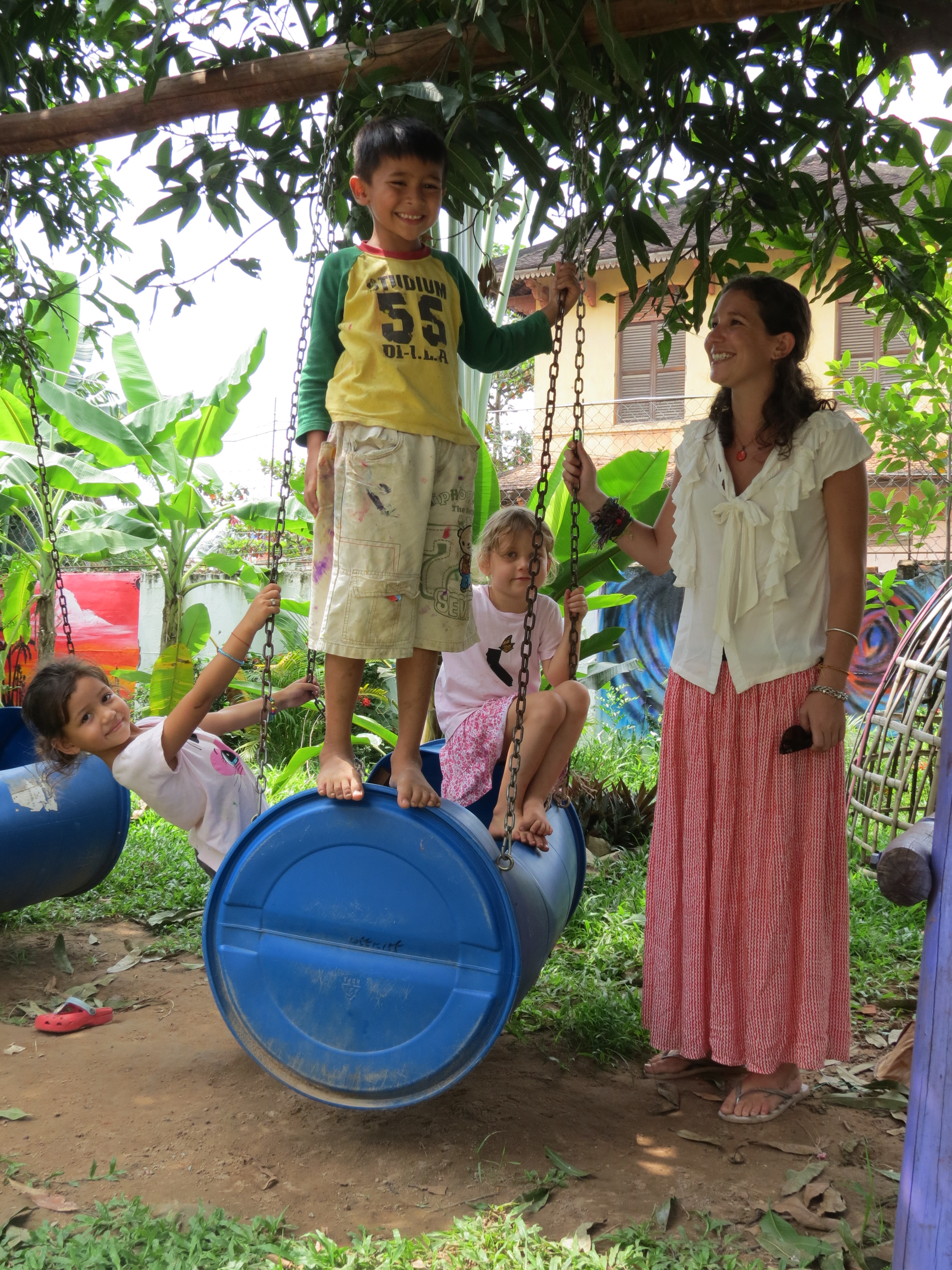
You’ll have to wait to “read all about it” in Weekender in the coming weeks, but I couldn’t resist a little teaser – Milly is doing a fantastic job, leading an interesting and fulfilling life and – like so many people I meet on the gift that is these travels – she’s an inspiration.
A lawyer by trade and training, Milly is 28 years old, very grounded and lives on the smell of an oily rag so that she can help build a bright – and safe – future for her little charges, 90 per cent of whom are Khmer. She is running the centre – Fireflies – as a business, but it’s basically a social enterprise without the charity status that hampers so many otherwise worthy operations.
You can have a sneak peek at what she does at her website – firefliespreschoolkampot.com. And stay tuned for an up-close-and-personal yarn with Milly in Weekender soon….
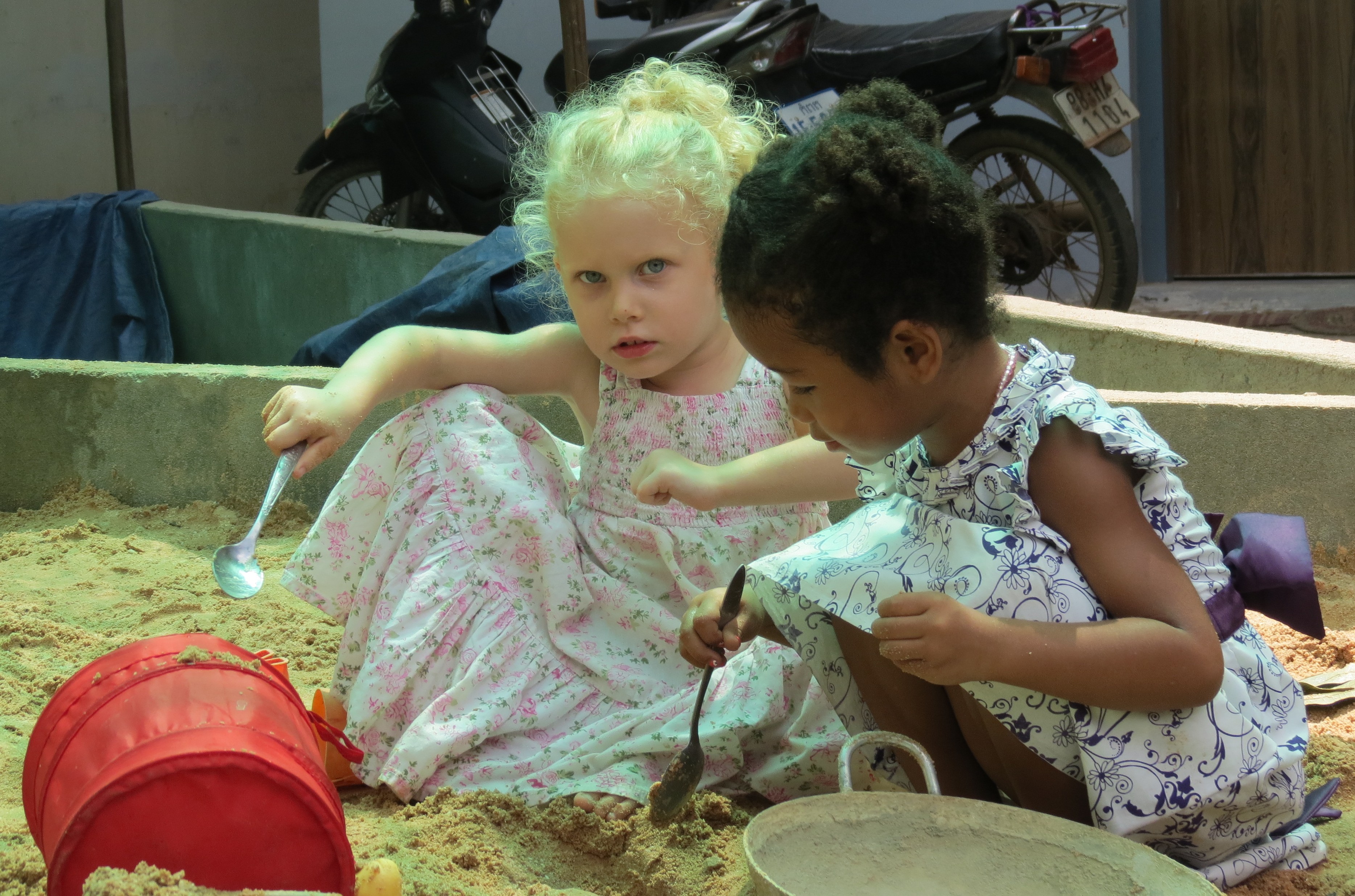
In the meantime – how’s “Colour Blindness” for the title of the photo below….
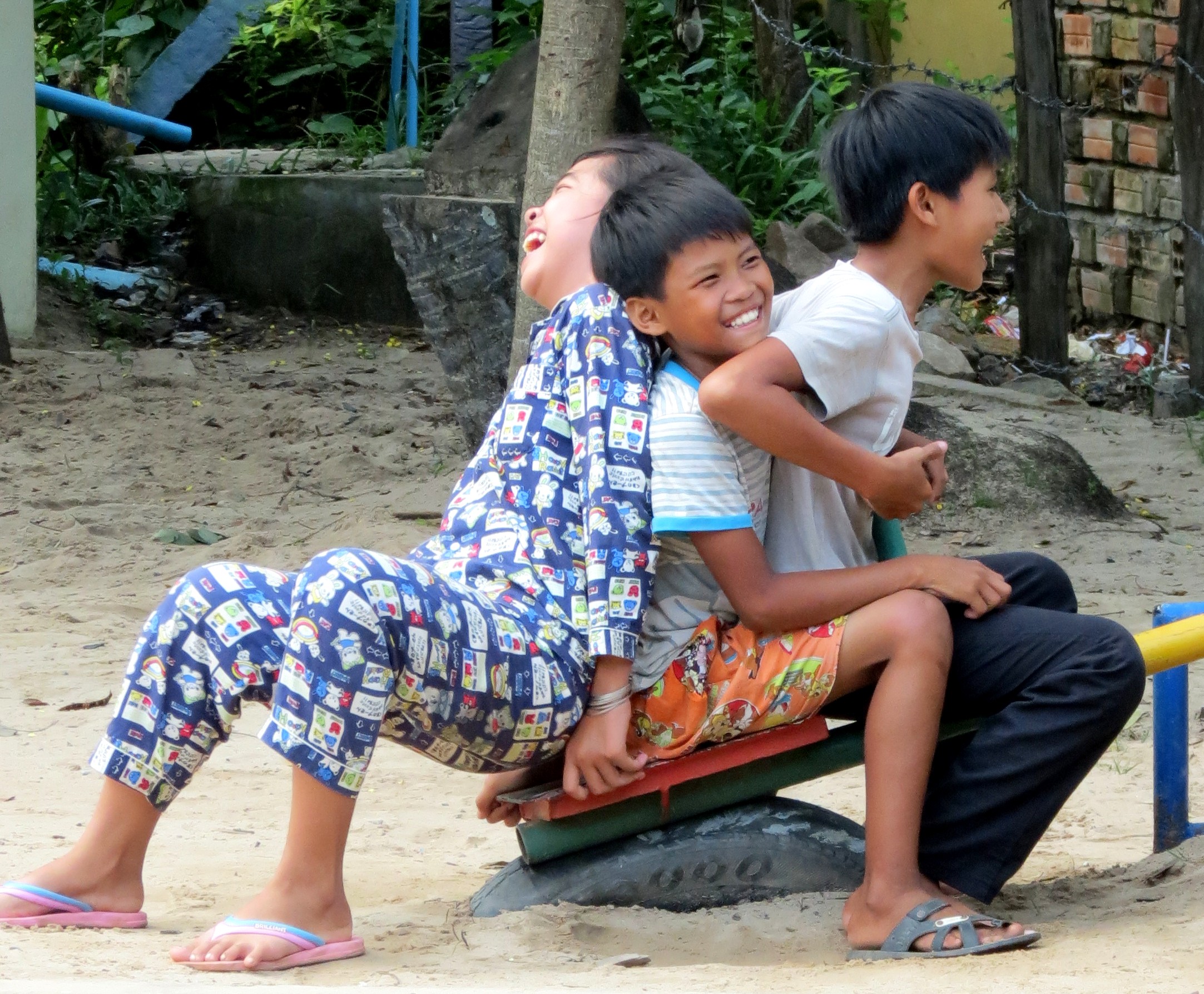
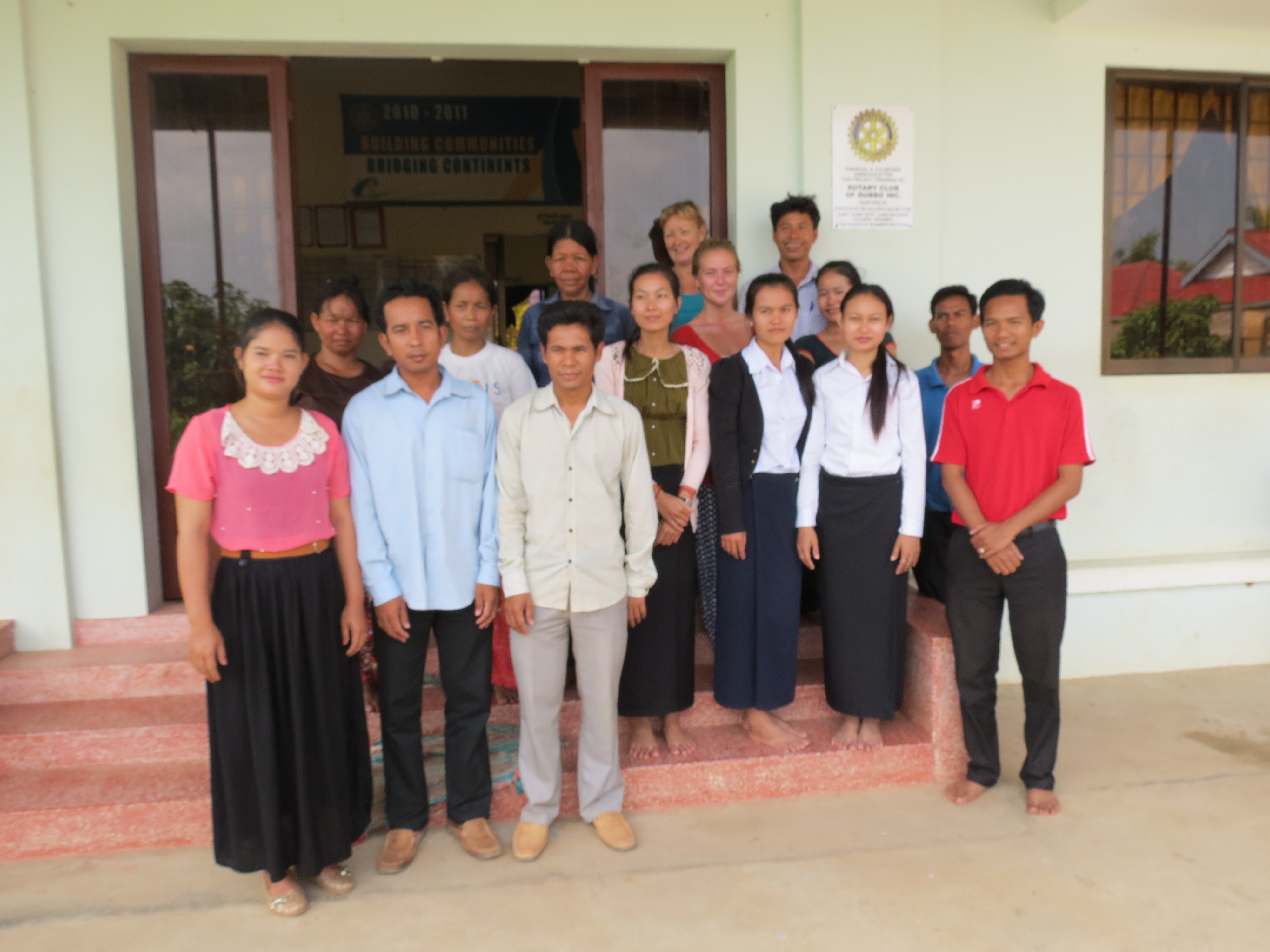
Since the concept of a language school at Chumkriel first took root – and from less than humble beginnings with Mr Thy, a desk under a palm tree and six students – the Chumkriel Language School (CLS) as we know it today is a thriving hub of educational and social activity.
With the support of Rotary, CLS now offers not only English language classes (its core business) but a range of educational activities and programs for the students and for the wider community of Chumkriel.
Here’s a quick overview:
The Computer Project: This project offers students and people from the community the chance to learn how to use the internet and Microsoft Office. Students learn to type in both English and Khmer. This helps to provide access to the kind of information we all take for granted these days. Visiting Rotarians and volunteers from Dubbo have helped to set up this project by providing computers and expertise. Access to computers also allows staff to keep in touch with donors and other organisations and to gather information and expertise as CLS grows. I have spent most of my time here on this visit helping Phoas and Mr T and the teachers to prepare a template for their monthly reports and quarterly newsletter.
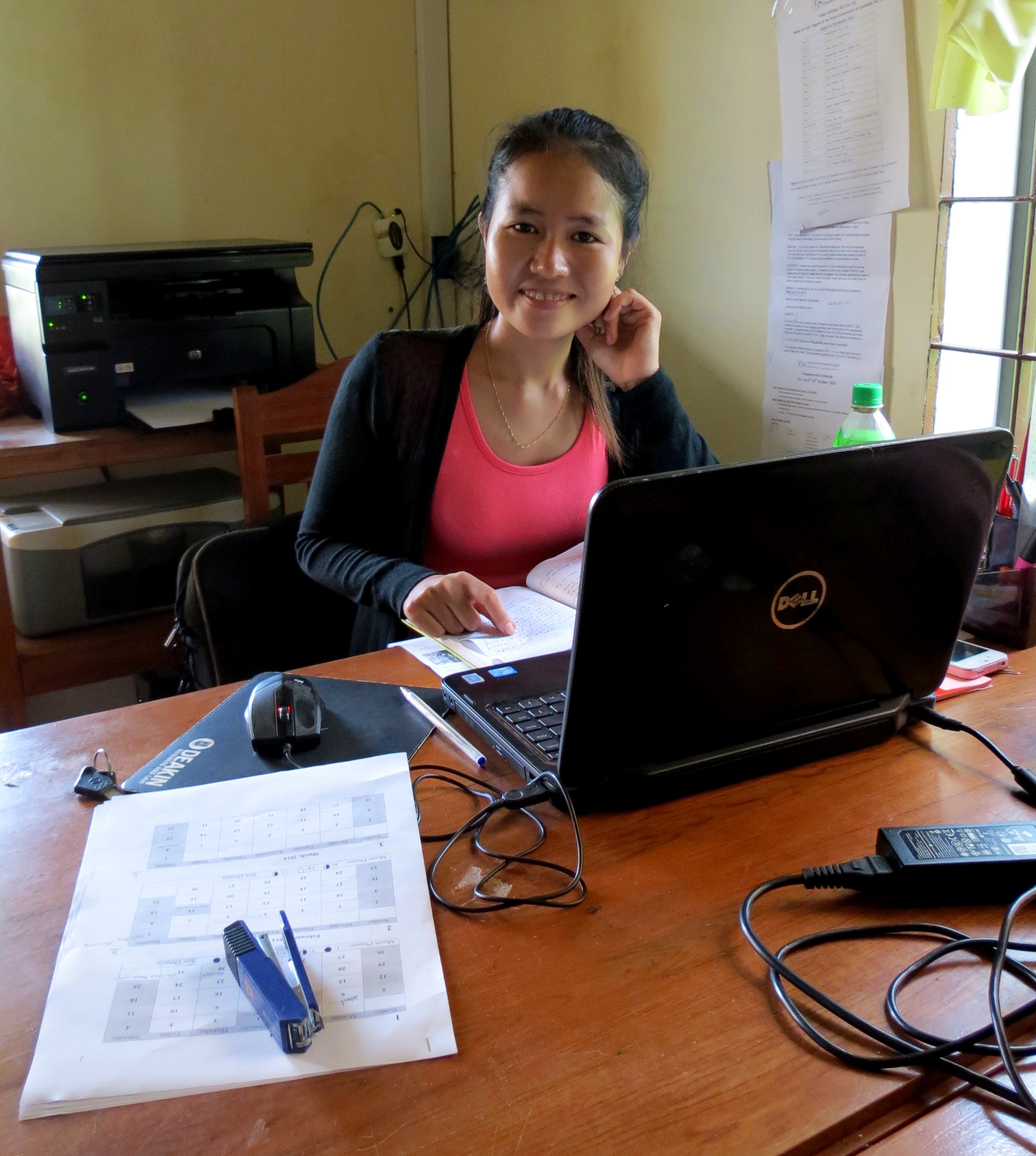
Community Focus Class:
CLS supports poor and at-risk students from the Chumkriel region to complete primary school and continue their education. Classes include English, Khmer, art, craft and physical education. Two classes consist of students who will study at CLS long term, beginning in Grade 2 or 3. Students complete the course in three years. CLS also makes these classes available to all students from the Chumkriel State School. Both long and short term educational opportunities are provided.
Evening School:
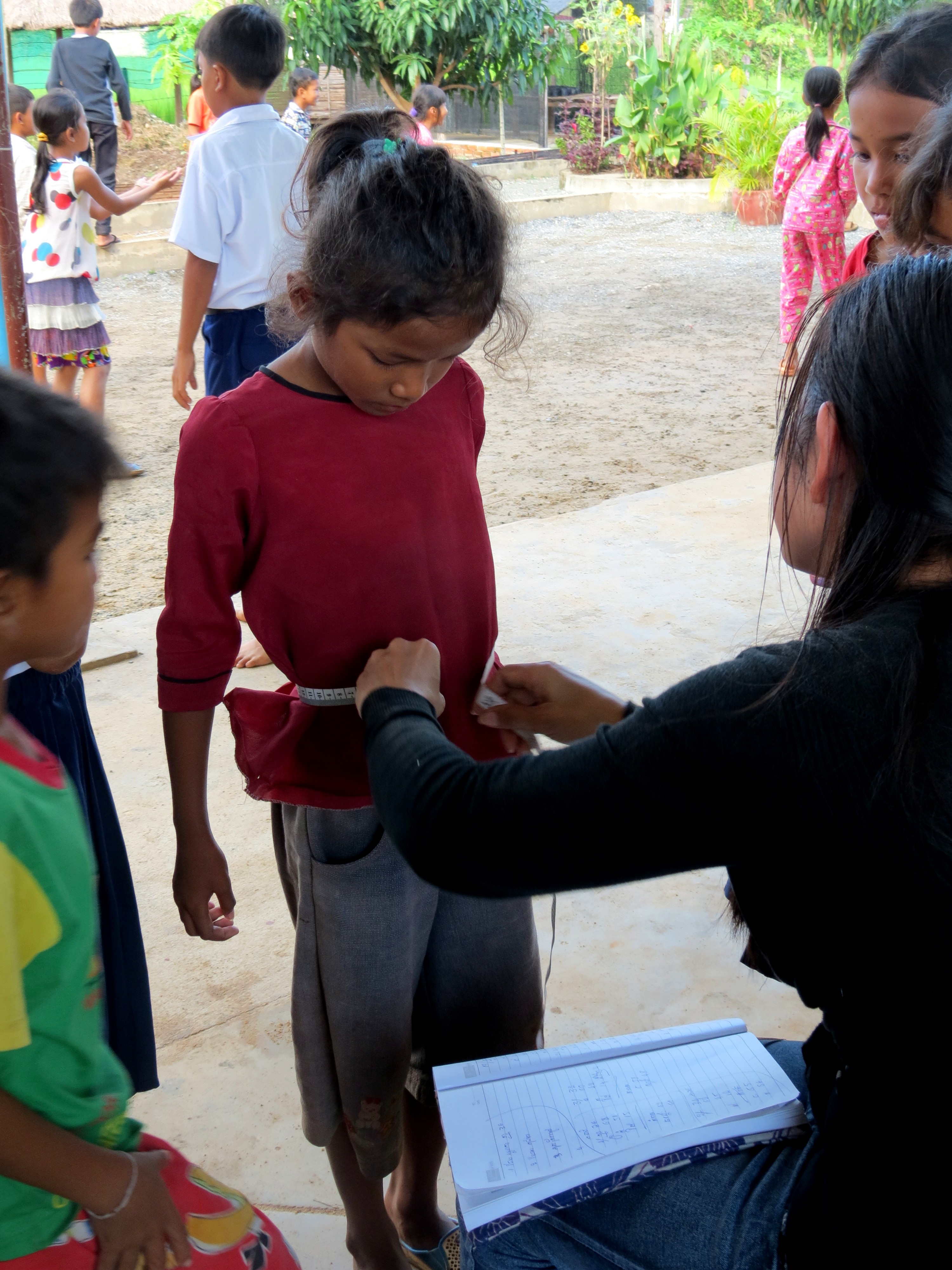
The Evening School offers affordable English language classes for children and adults throughout the Chumkriel area. By learning English, students have a better chance of finding employment and continuing their education. There are currently seven teachers, who take 14 classes, which are held week nights between 5-7pm. State Schooling in Cambodia is free, but many families are unable to meet the extra costs of educating their children, for instance providing supplies like books and pens and school bags, and also school uniforms (which are compulsory). CLS has identified a number of students to whom it provides a “scholarship” in the form of assistance with these items.
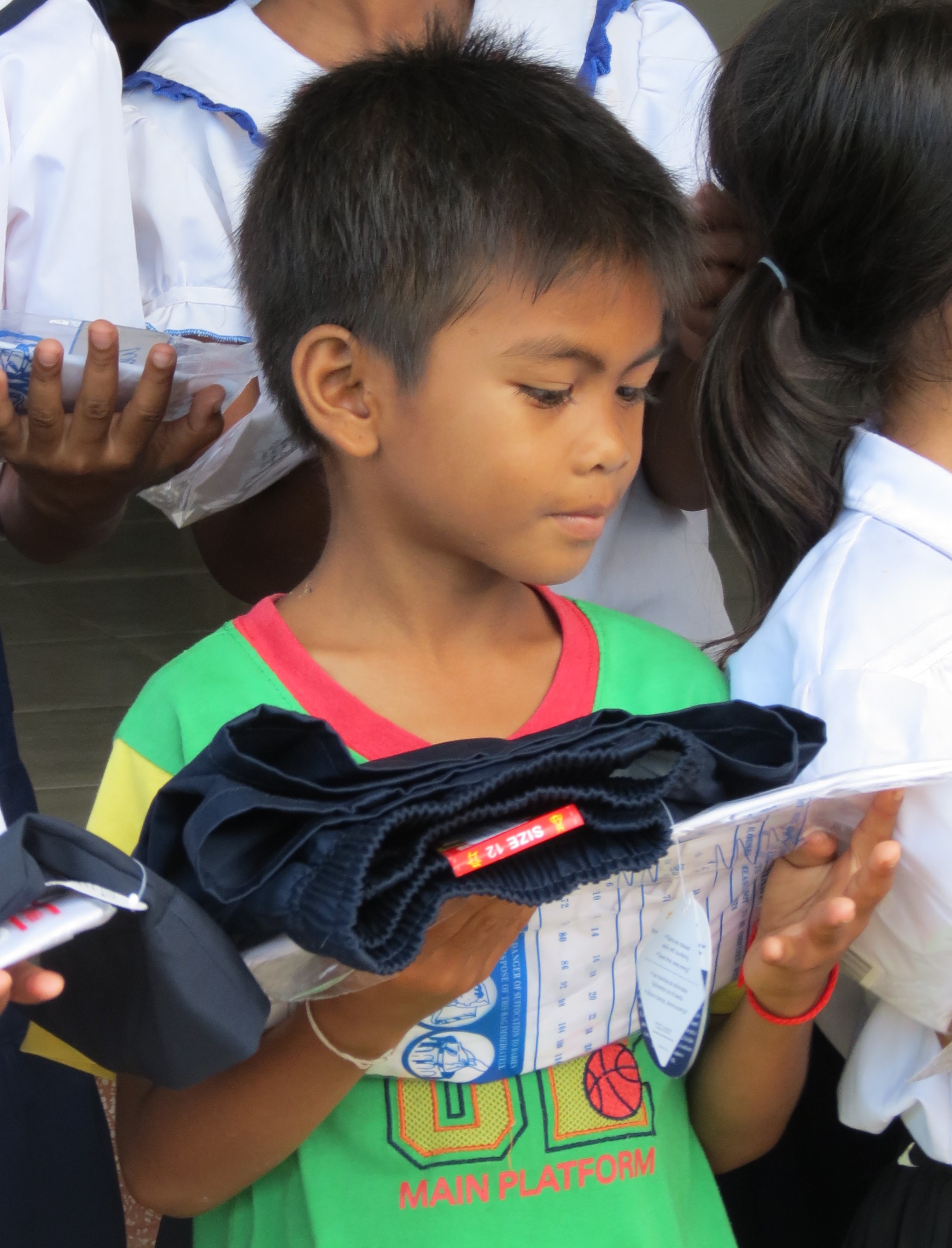
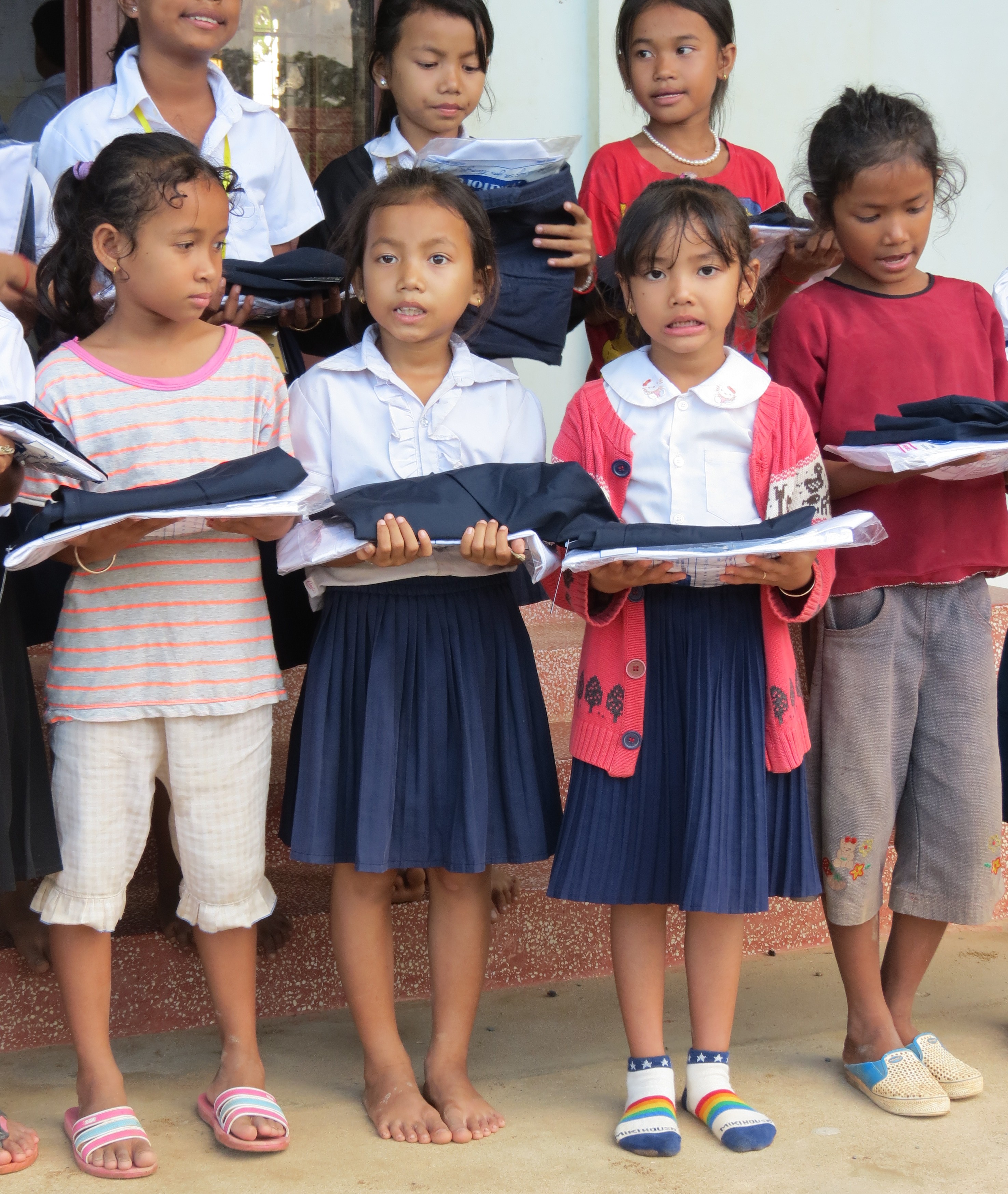
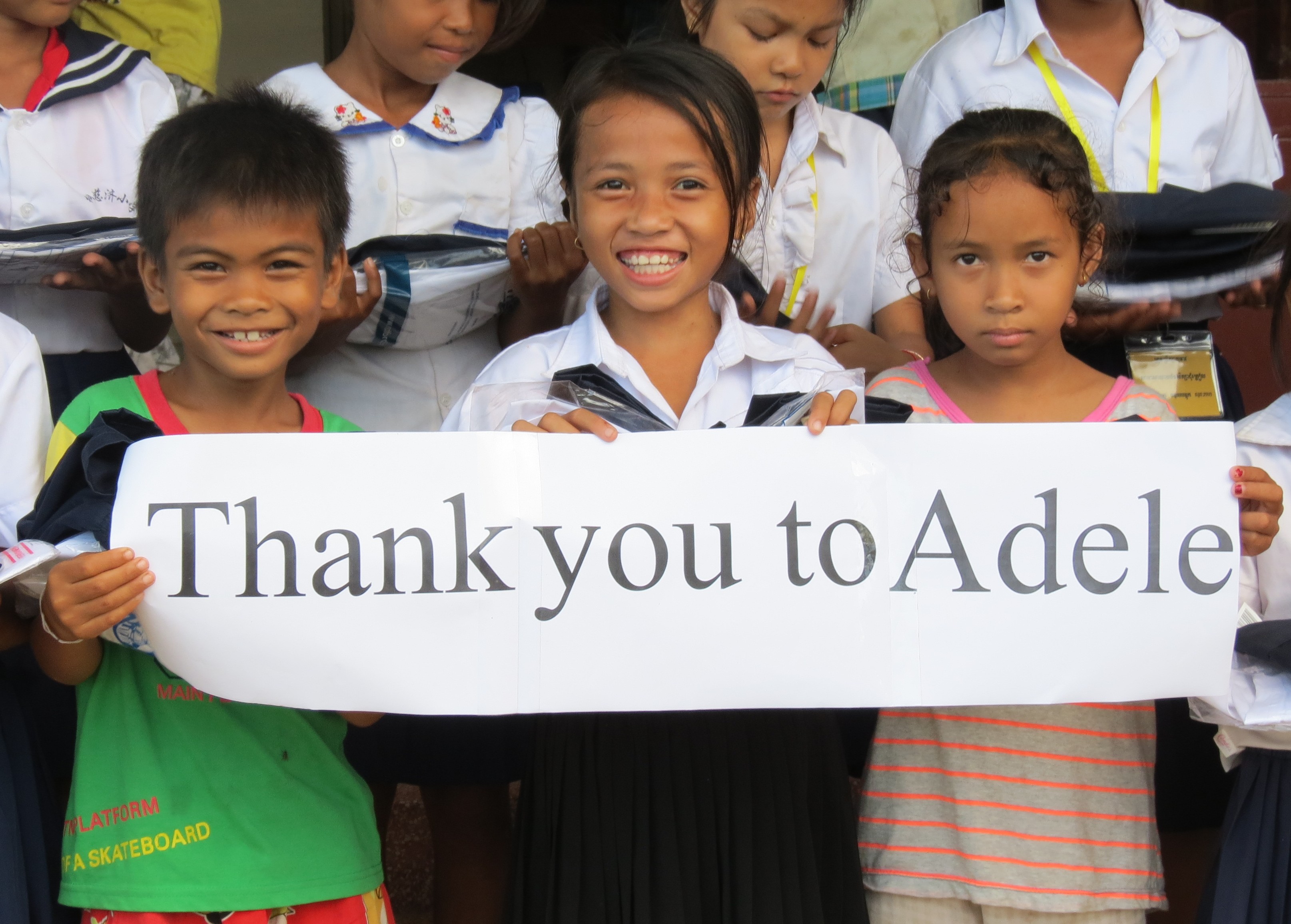
We were delighted during this visit to bring with us an extraordinarily generous donation from Dubbo businesswoman Adele Oulton, who supplied dozens of brand new white shirts, navy skirts and navy school pants and shorts for the scholarship students of CLS. The delight on their faces was worth hauling the two massive bags all the way from Oz. Thank you a thousand times over to Del for her incredible generosity. These children rarely, if ever, get anything new – and to see their little faces light up at being given these pristine clothes (all still in their plastic and with tags attached) was beyond priceless. Some of the shorts and skirts were a tad large (these little poppets are minute) so local social enterprise, Dorsu (which is a tailoring/sewing business that employs and teaches locals to sew) helped by altering the garments to fit.
The Salt Field Project:
This project assists children who are living and working at Chumkriel’s salt fields, to attend the State School. Families who live around and work at the salt fields are some of the poorest at Chumkriel, and are not able to afford to send their children to school. This is not only because of the cost associated with school, but because the children are needed to work in the salt fields, which are also quite a long way (by Cambodian standards) from the school. Parents are also (formally) uneducated, and do not recognise the value in education for their children. CLS works in concert with the State School, local authorities and other organisations to help provide equal access to education for these children – CLS provides help with transportation (there is now a bus – which is beginning to show the ravages of rust from travelling across the salt fields every day) – and also with the provision of school supplies for the children, all while aiming to increase the awareness of the importance of education.
The Library Project:
Established with the support and financial assistance of the Rotary Club of Dubbo Macquarie, after member Glenys Mulholland visited CLS in 2011, the Library has gone from strength to strength, and is a very valuable resource for CLS. The books and resources are provided free for the use of students and people from the community. Library classes are held, and there is often a teacher available to help people from the community with their reading. During last year’s visit, our team made had a book-buying trip in Kampot (and in Phnom Penh for those books we couldn’t source locally) to purchase English and Khmer text books and resources to stock the library. We also donated some of these books to the State School, because the students of CLS benefit from the sharing of resources.
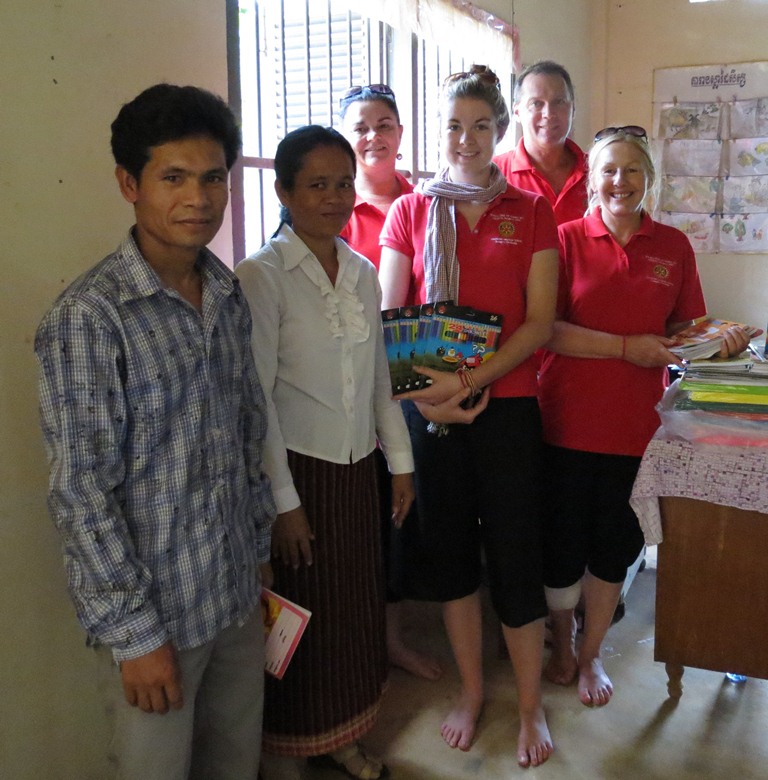
Presentation of books
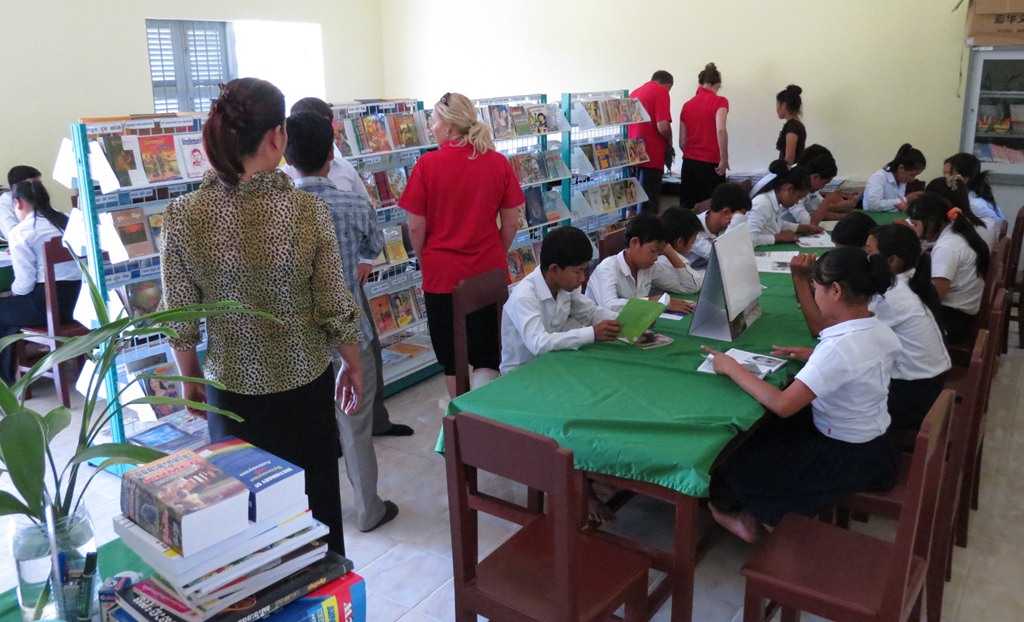
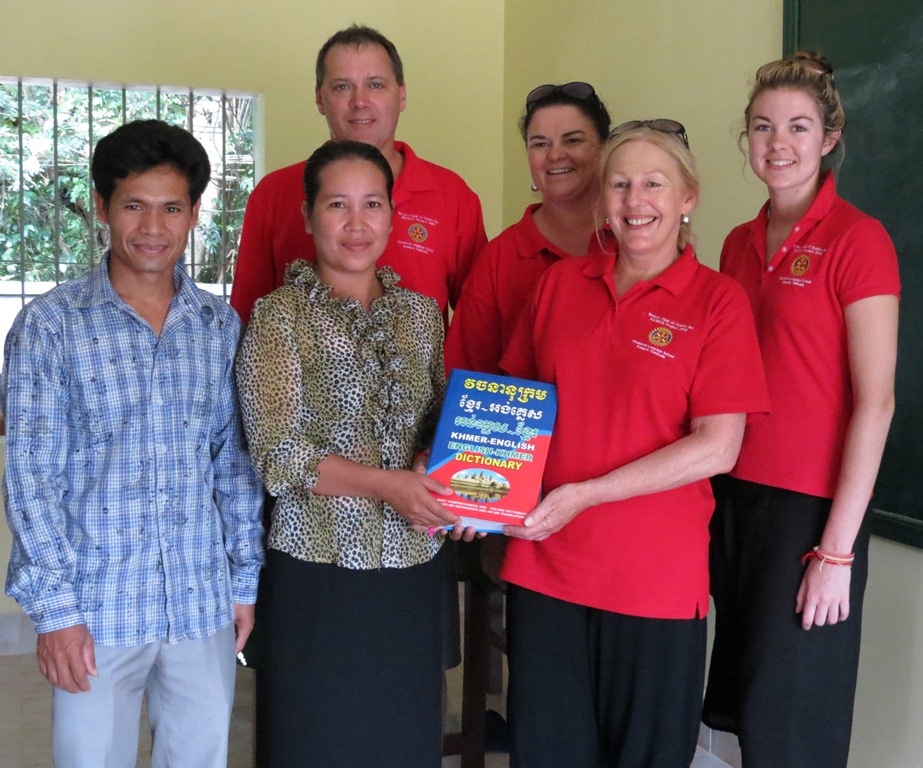
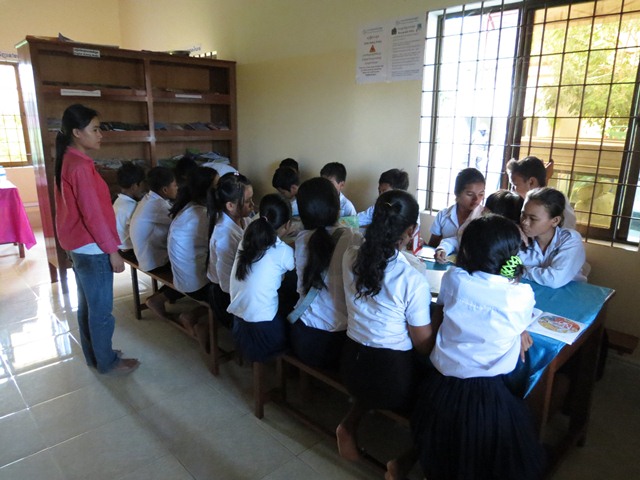
CLS Library – 2012
The Agriculture Project:
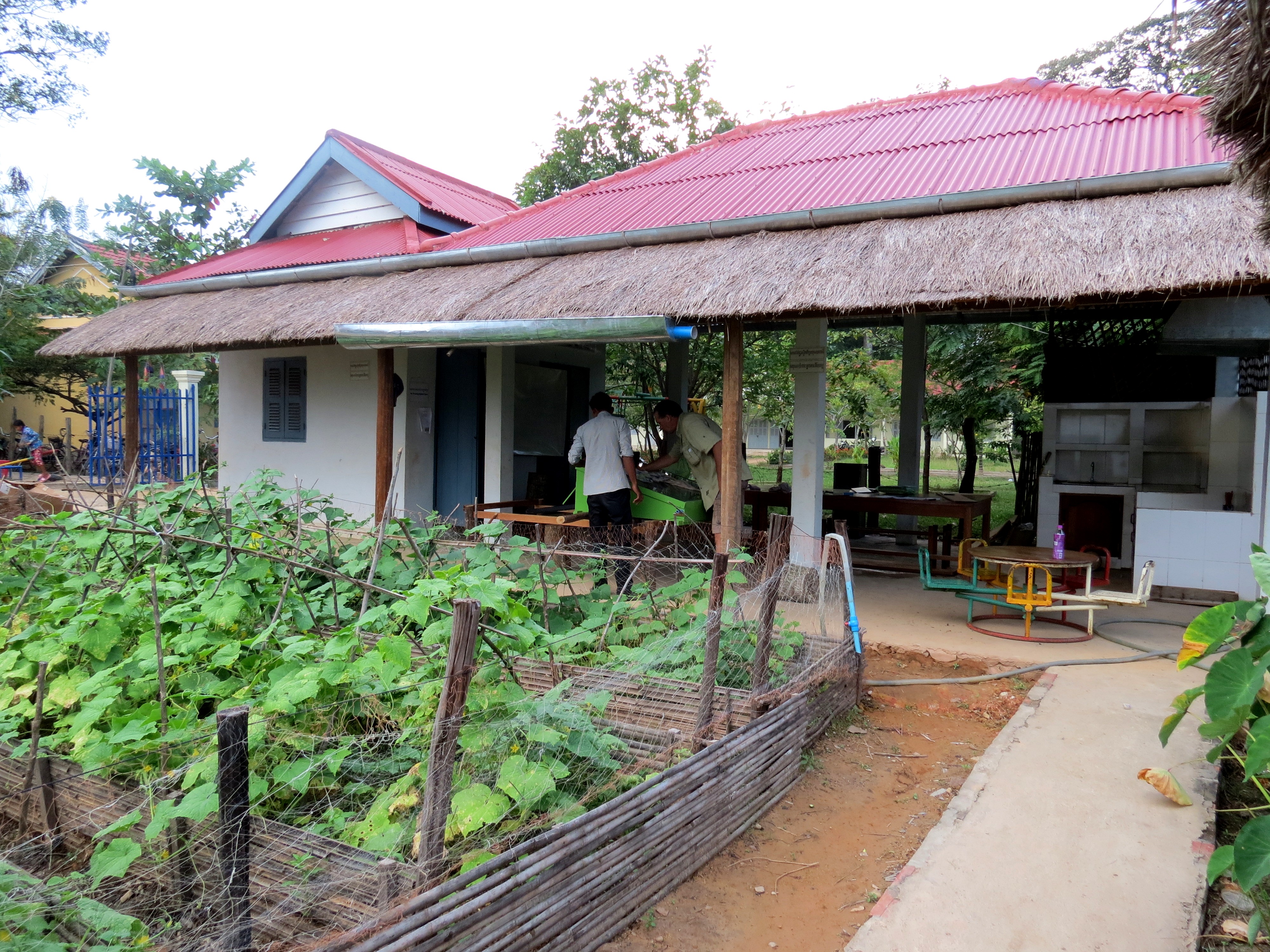
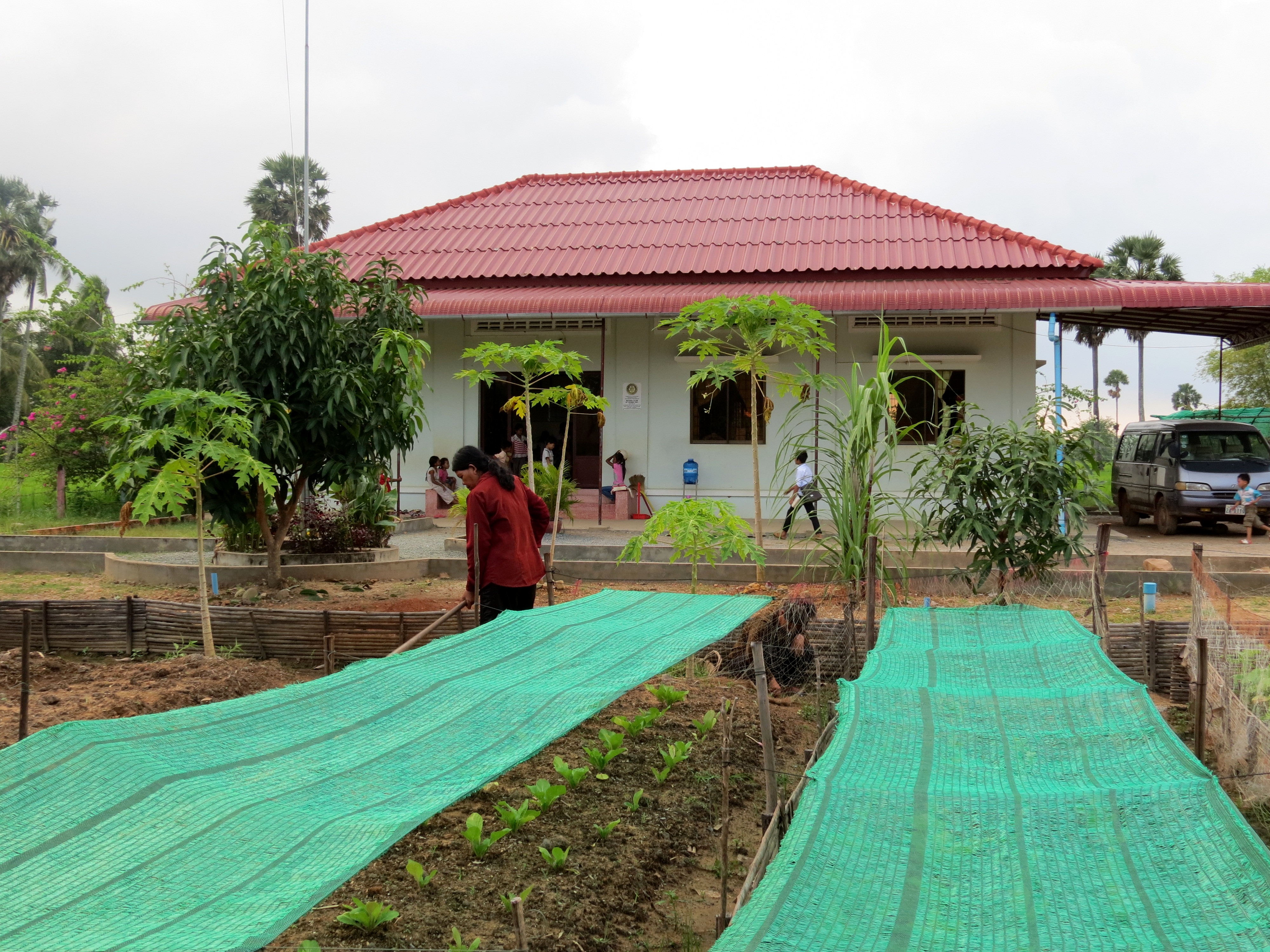
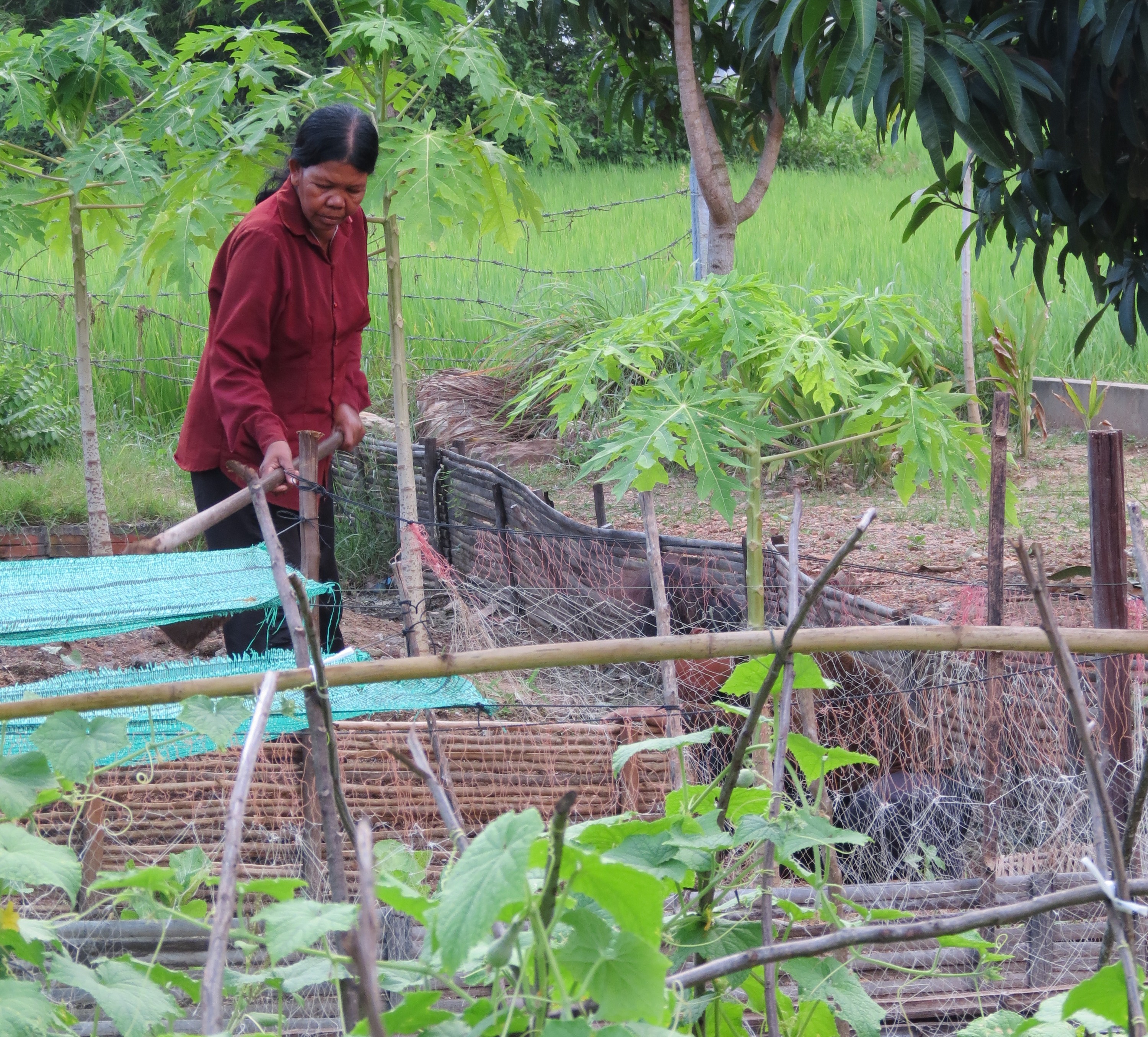
Being from the bush, an’ all, we have been particularly thrilled with the progress of the agriculture project and plot at CLS, which is lovingly tended and co-ordinated by Sony, one of CLS’s wonderful teachers. This past few weeks has seen a bumper cucumber crop – and I swear you can almost hear them growing! The vegetables (the plot is also growing Chinese radish and some carrot-like vegetables, with tomatoes planned when they come back into season) are used to help supply the Soup Kitchen Project (see below) and it’s hoped to eventually grow enough to sell some for profit in town. Sony spent some time last week hawking the cucumbers around town to some of the restaurants – which was terrific motivation. All the vegetables are grown organically. The compost is made by local volunteers who come to the school and mulch up all manner of organic material they find around the community – this is then turned into compost and used on the furrows. Sony tells me he has used the resources in the library and on the internet to research ways to grow organic vegetables and make his own natural pest repellants. Eventually, Sony would like to extend this project to teach students and community members about organic farming practices.
The Soup Kitchen Project:
Some families are so poor they are unable to feed their children properly, which in turn affects school attendance and learning. CLS provides a nutritionally balanced lunch to 30 students five days a week. The students and their parents are also given information about eating well even with minimal resources, and CLS also helps with medical assistance where necessary. As I mentioned, the agriculture plot helps to provide ingredients for the soup kitchen.
Health and Hygiene:
Way back when the CLS project first began, one of the first activities the Rotary volunteer team did was to conduct some basic “wash your hands” classes. From that small gesture, the CLS hygiene project has grown and is now a formal and important part of the overall provision of education at the school. CLS provides the children with toothbrushes and toothpaste and teaches them how to use both, along with helping those in need to access dental care. Part of the program is teaching children how their health is related to the environment. Lessons about cleaning up rubbish are also taught (it’s a slow and steady battle!).
Although Rotary and now other organisations have been instrumental in the progress of CLS, it’s thanks to some very dedicated local Khmer people that it is now a sustainable and professional organisation – leading that charge is the inimitable Mr T (Thy Sothy) whose dream it was in the first place. The man is extraordinary – and his is the smile that sealed a hundred funding deals! We are honoured, proud and humbled to have been part of what CLS is today and what it will be in the future.

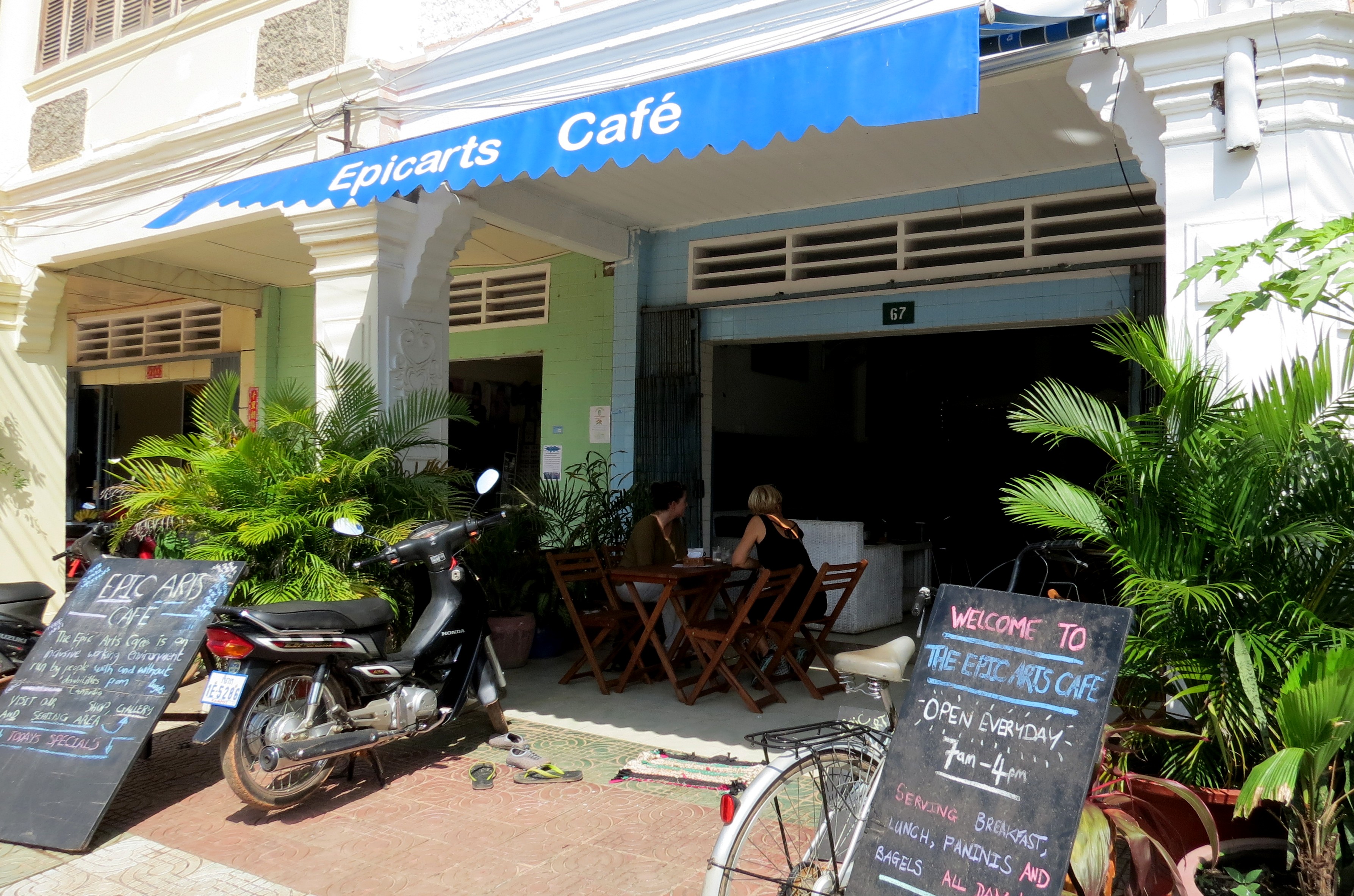
Over the years, there’s been one little coffee house in Kampot that’s become something of a bolt-hole for visiting Dubbonian Rotarians.
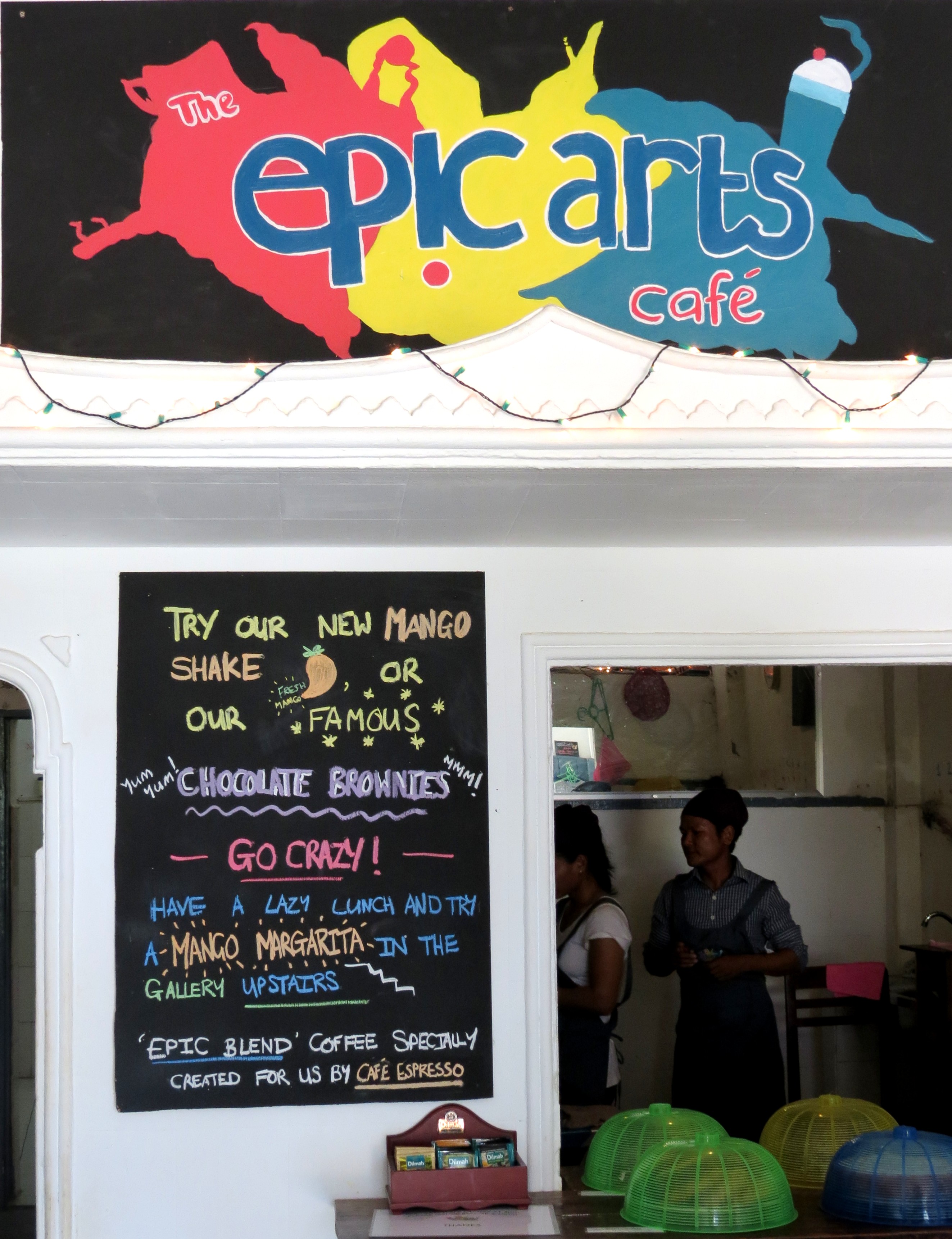
Established in 2003, Epic Arts Cafe is a social enterprise that provides an “Inclusive working environment” for disabled local people – many of them deaf.
Essentially, Epic Arts brings employment and empowerment through the arts for people with and without disability. The cafe is the “face” of the organisation and it’s staffed entirely by people with a disability – people who are without doubt among the most friendly, cheery and utterly delightful in all of Kampot.
Orders are taken through an innovative system whereby customers choose from the menu then record their own order on a special form. SIgns around the cafe advise that if staff fail to respond, they’re not being rude, they’re just deaf! And the menu comes complete with a very handy little lesson on Khmer sign language.
Adorning the walls is a range of artwork and craft items made by the “employees” of Epic Arts – everything from cloth bags to jewellery and cards and traditional scarves. The organisation runs a number of inclusive arts-based programs, with their overall aim being to encourage everyone to “see the ability not the disability”.
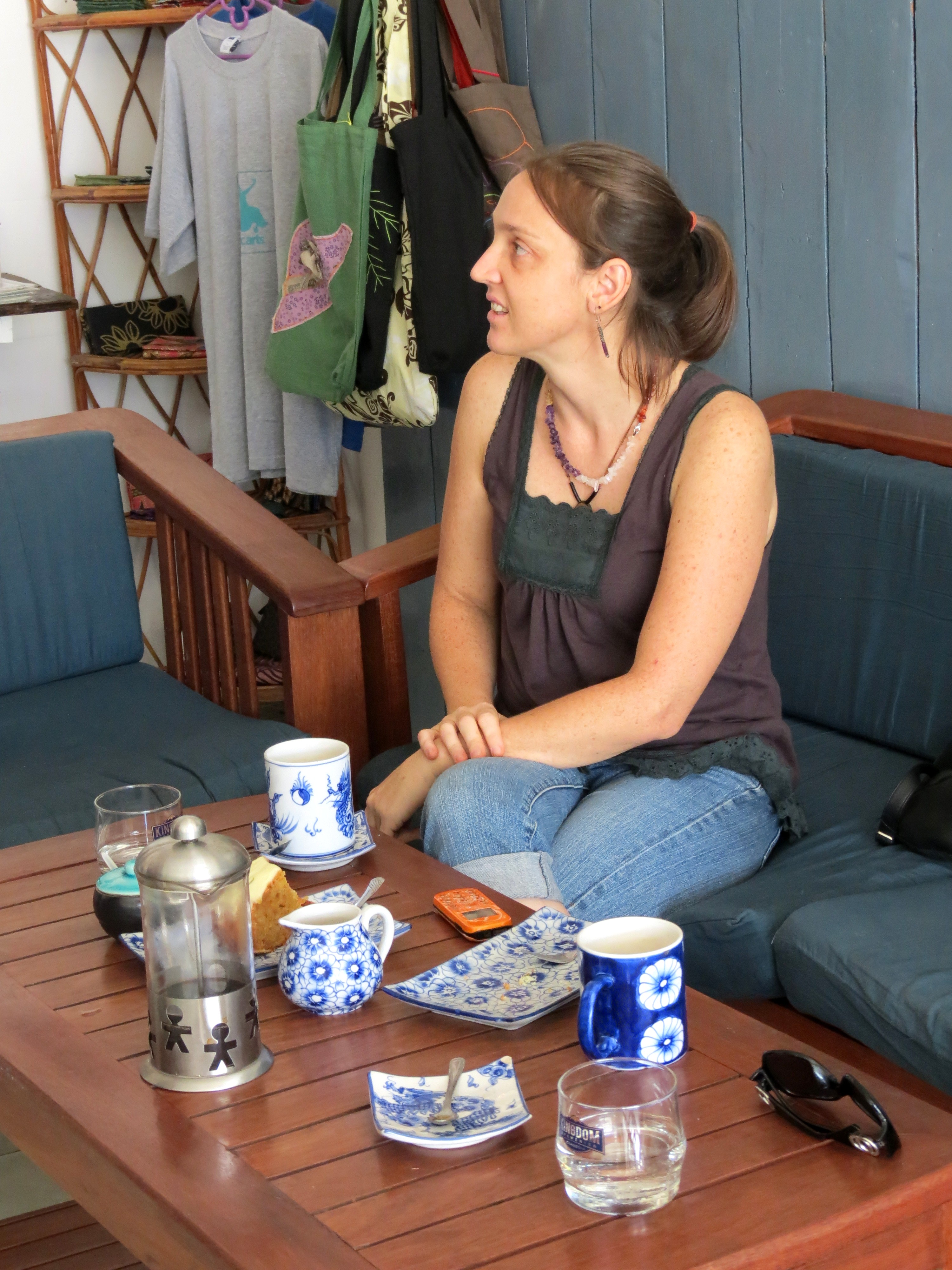
When I visited today with Jos Barber (Narromine ex-pat, Kampot guest house owner, CLS board member and all-round extraordinary person) , the place was chock-a-block with people from all over the world enjoying the great coffee and great food, secure in the knowledge that their money was being put to good use.
Epic Arts is a worthy organisation and its people are charming.
Not to mention that thier lime/coconut cake seriously should be legal tender.
Being on the coast, fishing is a major industry for the people of the Kampot region – and while we continue to marvel at the fact that there are any fish left (there’s no such thing as a size limit here) the industry sustains many people both personally and commercially.
Our little off-sider Phoas (liaison/admin at CLS) came with us for a day at Sianhoukville (further down the coast) on Sunday and on the way back she asked if we could stop so she could buy some crabs for her family for dinner.
The arrival of “barangs” created quite a kerfuffle – it’s not what you’d call a tourist destination – and we were ushered with great ceremony down behind the shop front to the little processing area along a very rickety dock area (terrified with every step that my big barang legs would go straight through the boards and into the murky – and I DO mean murky – depths below) where the crabs were being unloaded fresh from the boats to be sorted into sizes (again no size limits – some were only as big as a 20c piece). Phoas selected 1.5kg of live crabs – for which she paid $US12.
There was great interest in us – and as usual, the kids were fascinated by my camera and insisted I keep taking their photo. I was happy to oblige.
But I’ll be eating chicken for a while, I think…..
Although this is my third visit to Kampot, there is still so much to discover and learn.
We took a break in the CLS traffic over the weekend to do a couple of day trips out of town, and on Saturday made the trek up Bokor Mountain, which overlooks Kampot and the Kampong Cham region.
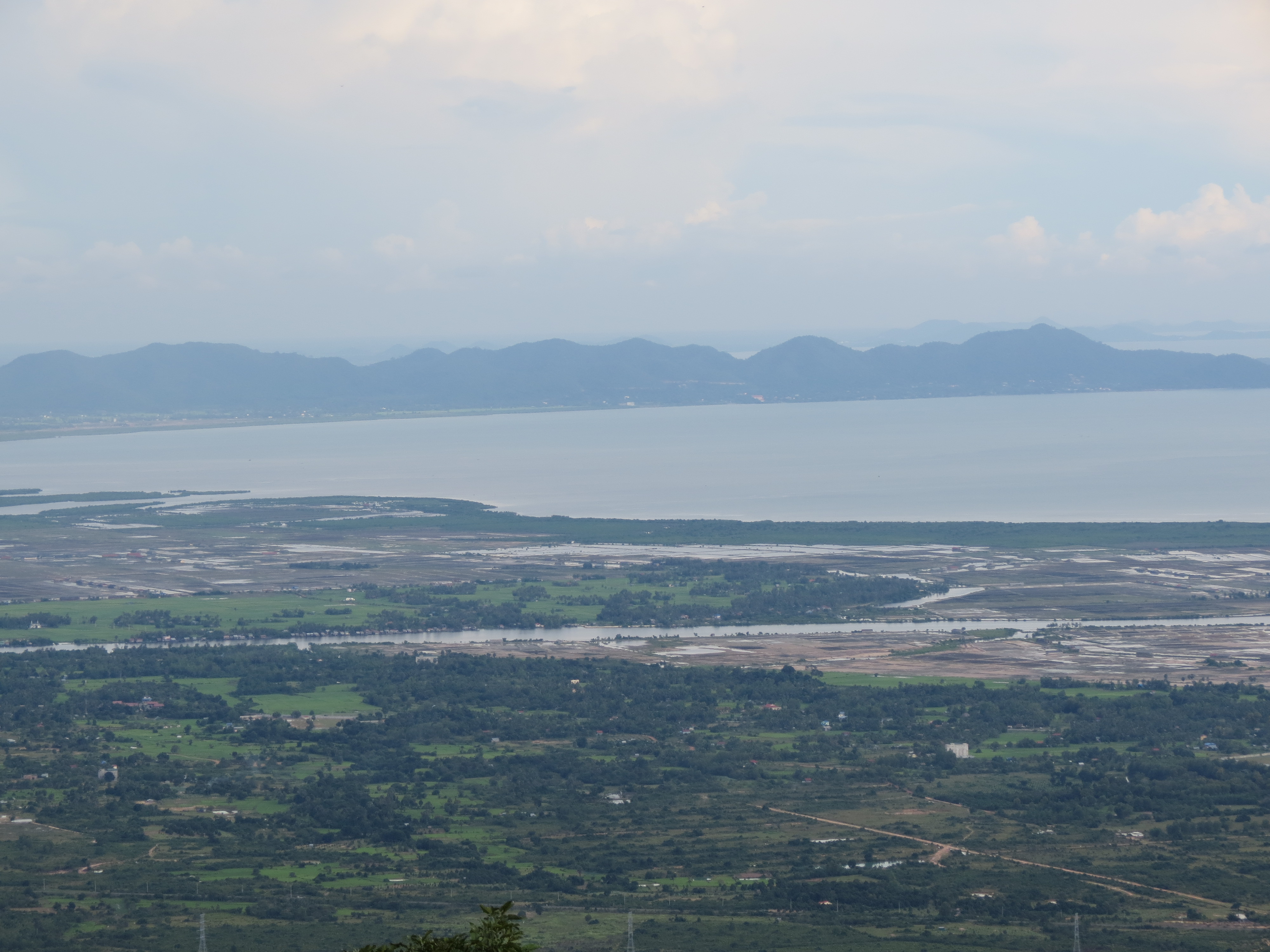
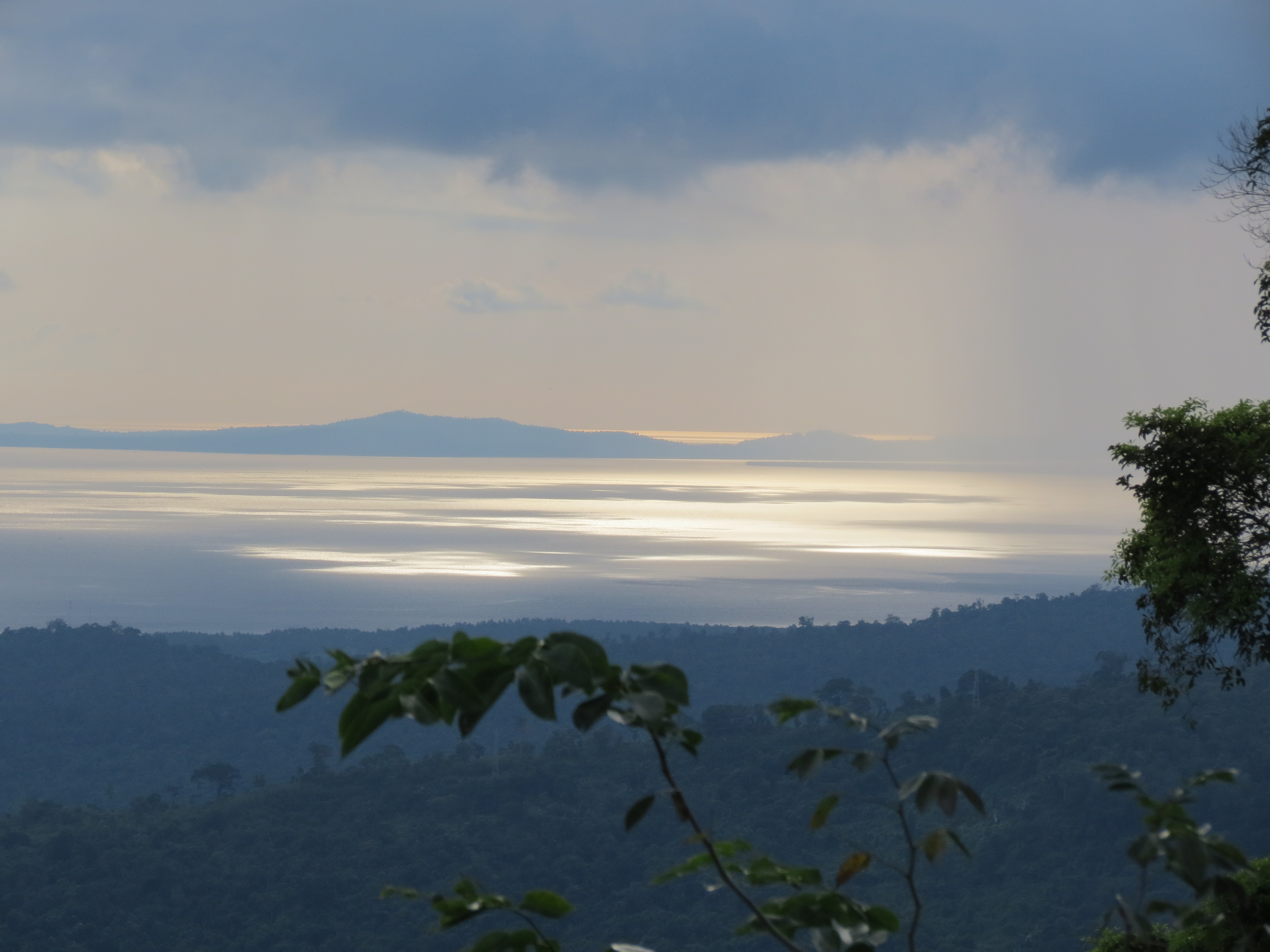
The journey up the mountain takes about an hour and a half on a motorbike – and anyone familiar with my usual disdain for the things will know this is no mean feat.
But road up into Bokor National Park is very good now , thanks to the Chinese-built monstrosity that now sits atop the mountain in the form of a giant “resort” hotel and casino complex. It was built with the intention of drawing hoards of international visitors and the money that’s been invested into the place is eye-popping. However it’s populated almost entirely by hundreds of Khmer staff – which is good for employment – but very few visitors. In fact, it’s so deserted, it’s borderline creepy. I’m sure I heard the strains of “Hotel California” playing as we walked through the massive front doors.
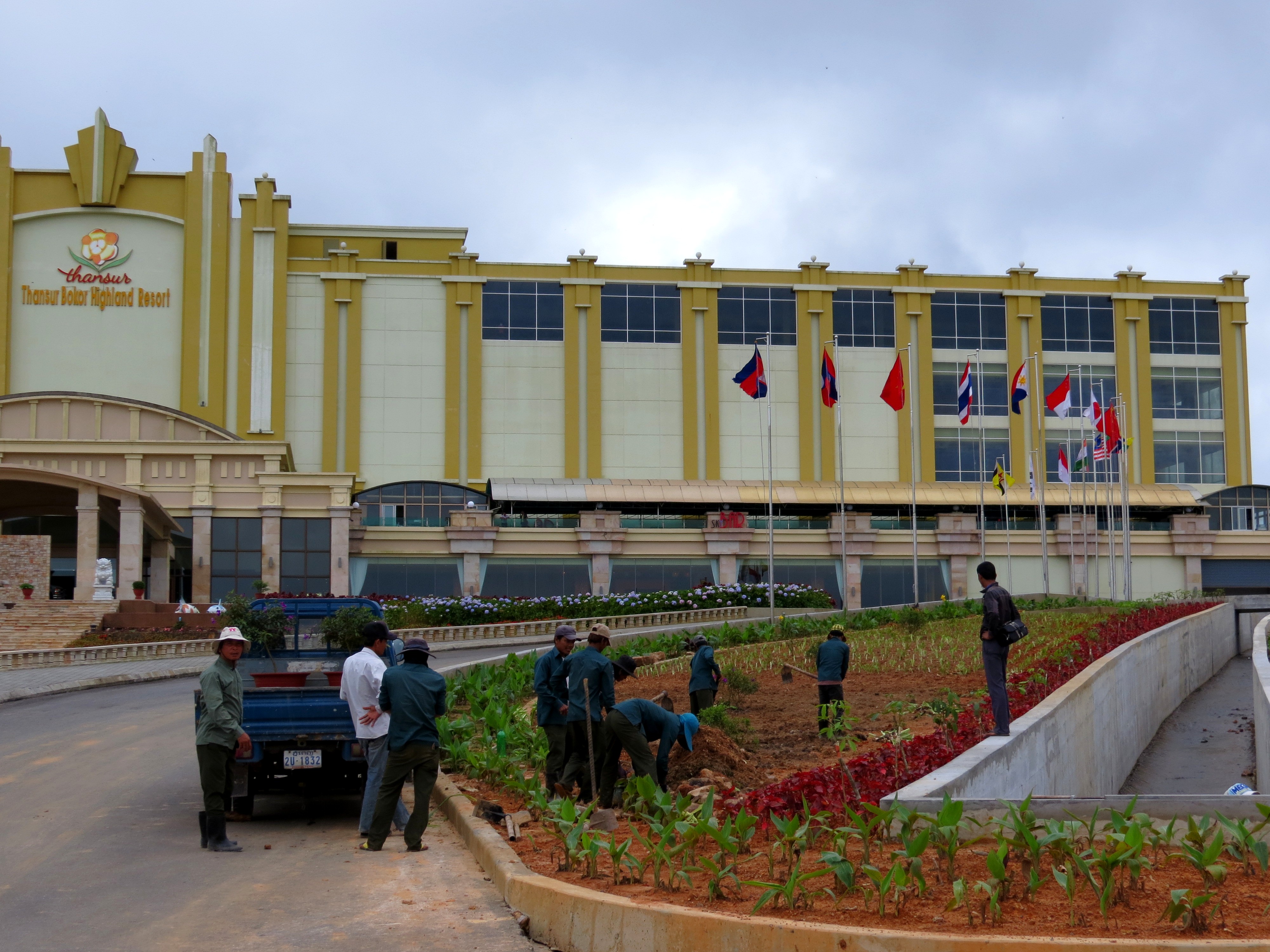
But that meant loads of customer service when we sat down for lunch at the 100m buffet – groaning with enough food to sustain the entire community of Kampot for a week – but apart from a portly German gentleman who tucked in like a human hoover and wouldn’t meet our eyes – we were the only “guests”. And I couldn’t help but note the obscenity of such waste in a country so poor. I’d like to think the leftovers went to the staff, but I won’t be holding my breath.
Atop this misty mountain, we also found some remarkable remnants from the past. There is an abandoned Catholic Church – built as part of a colonial French settlement. We were greeted by a sign warning we should not sleep there overnight. Not a chance in hell of that anyway, sporto – the place was eerie enough in daylight. At night, I’ll wager it would scare the bejeezus out of Stephen King.
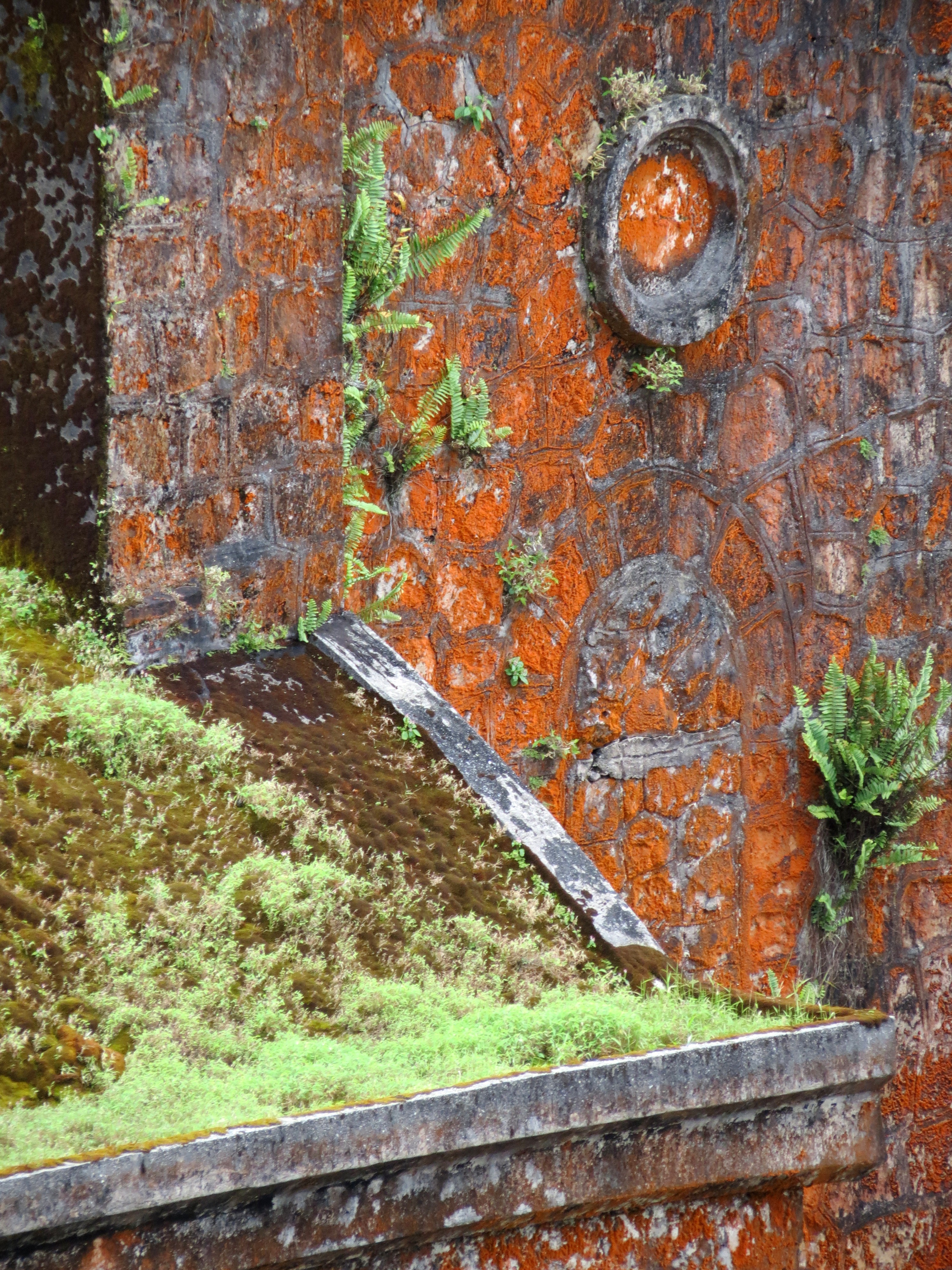

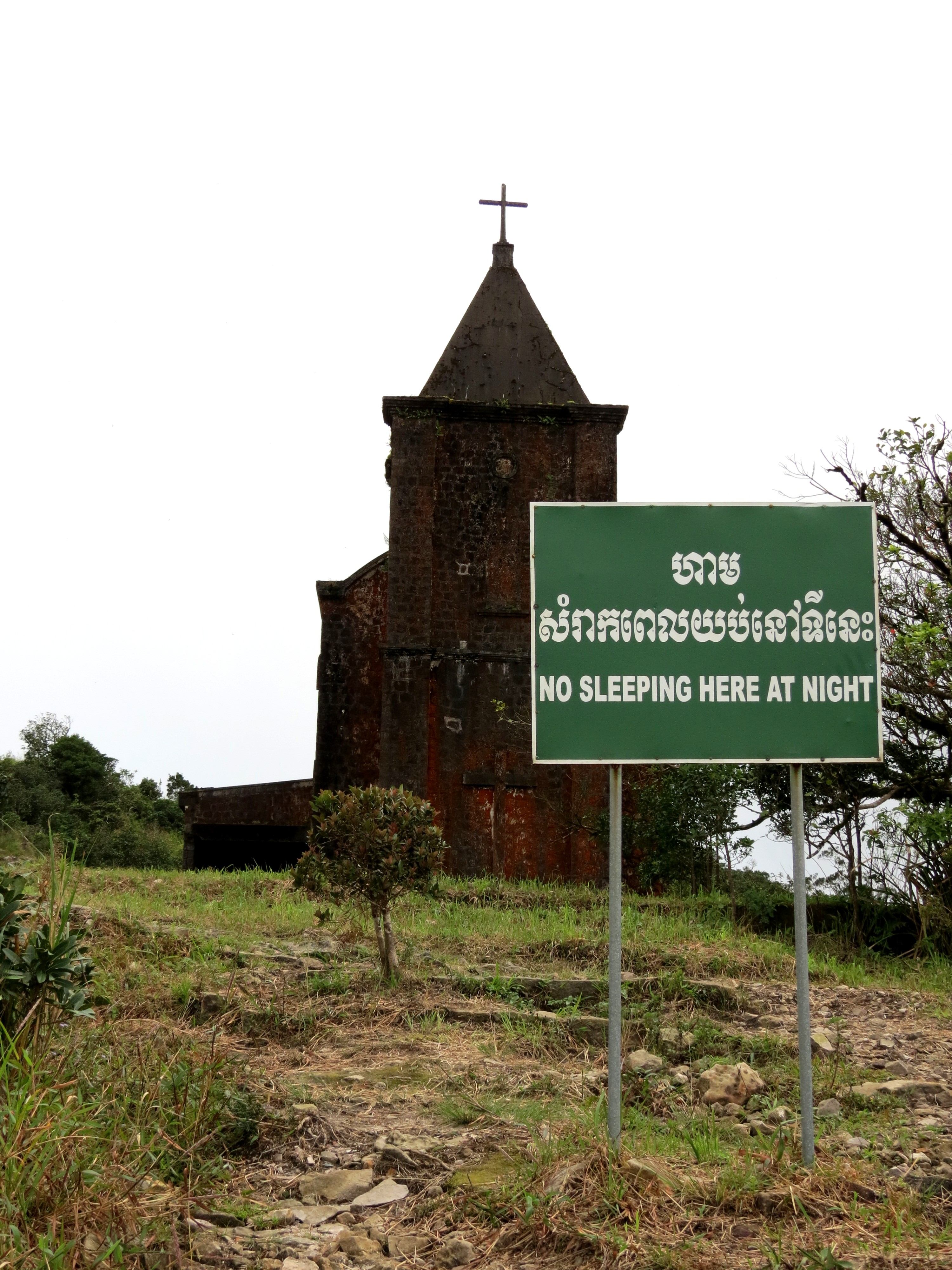
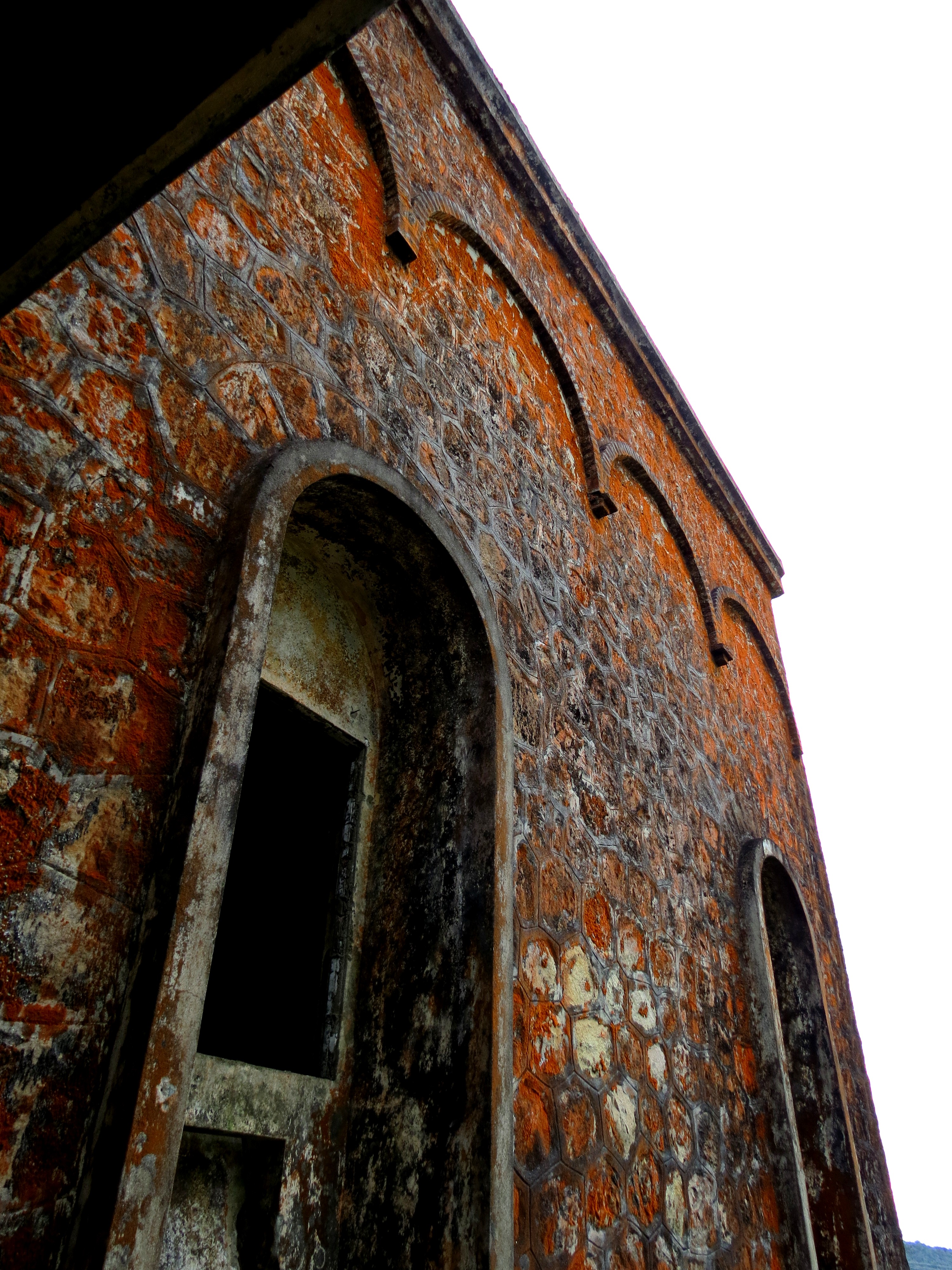
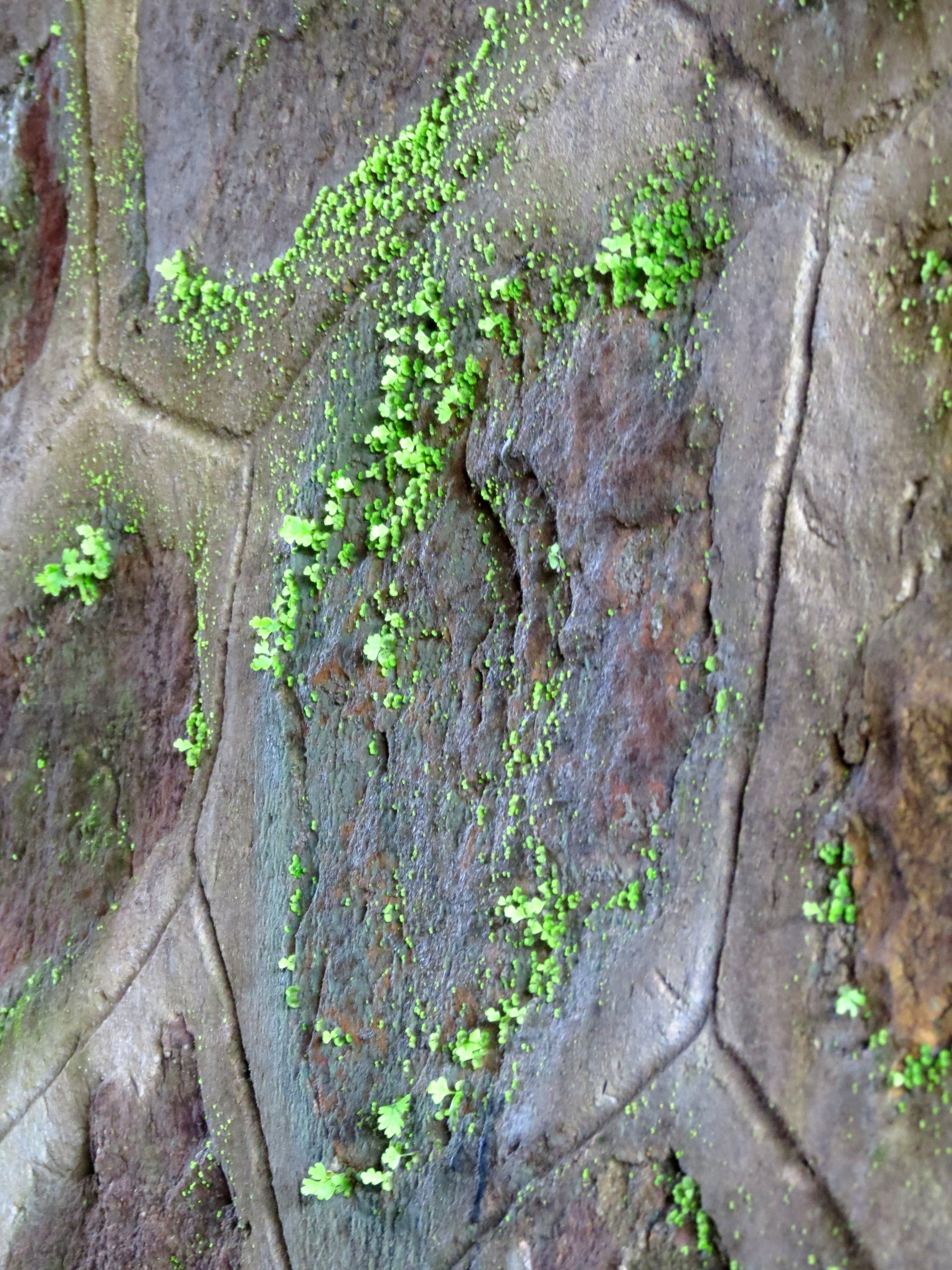
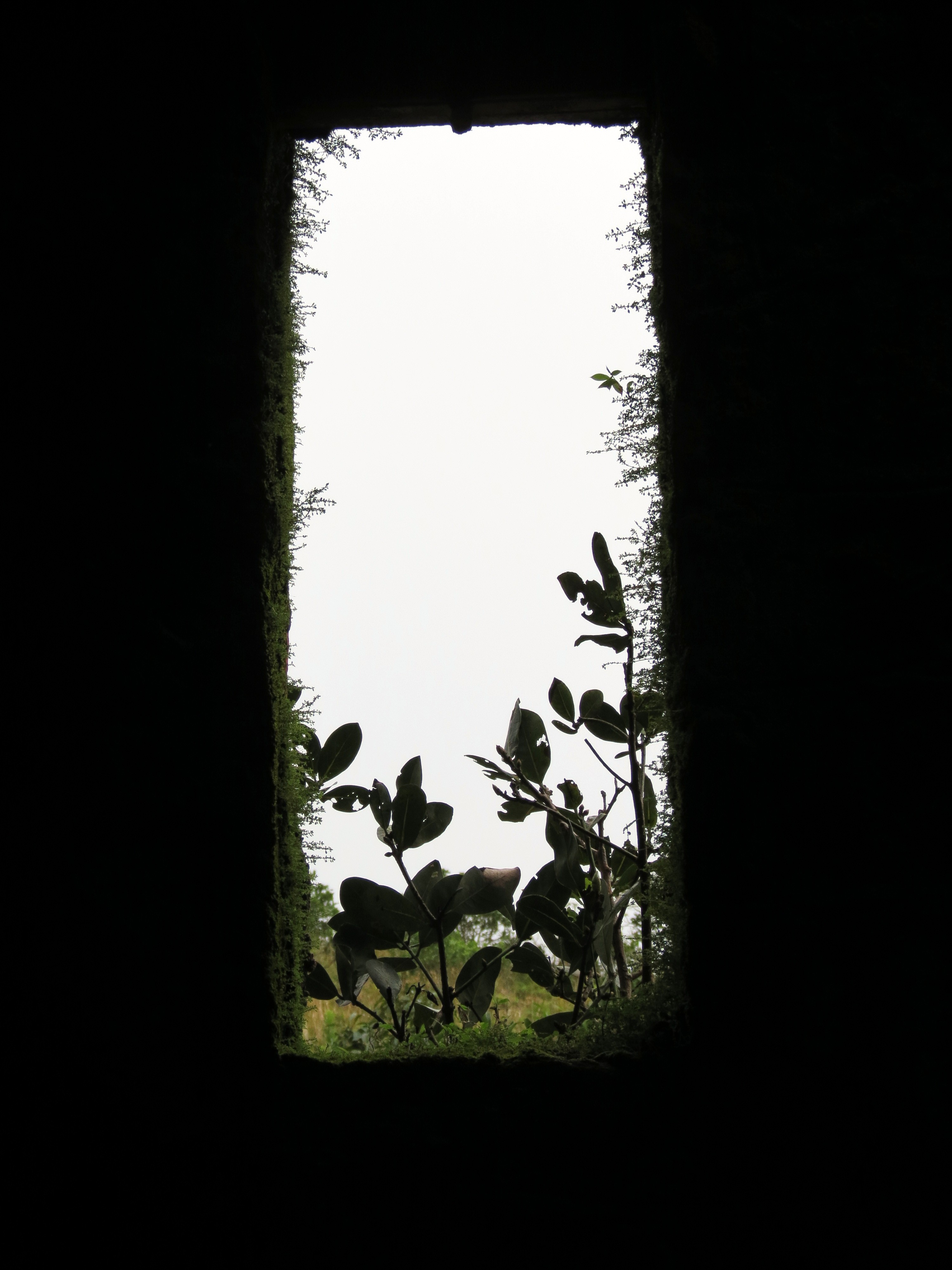
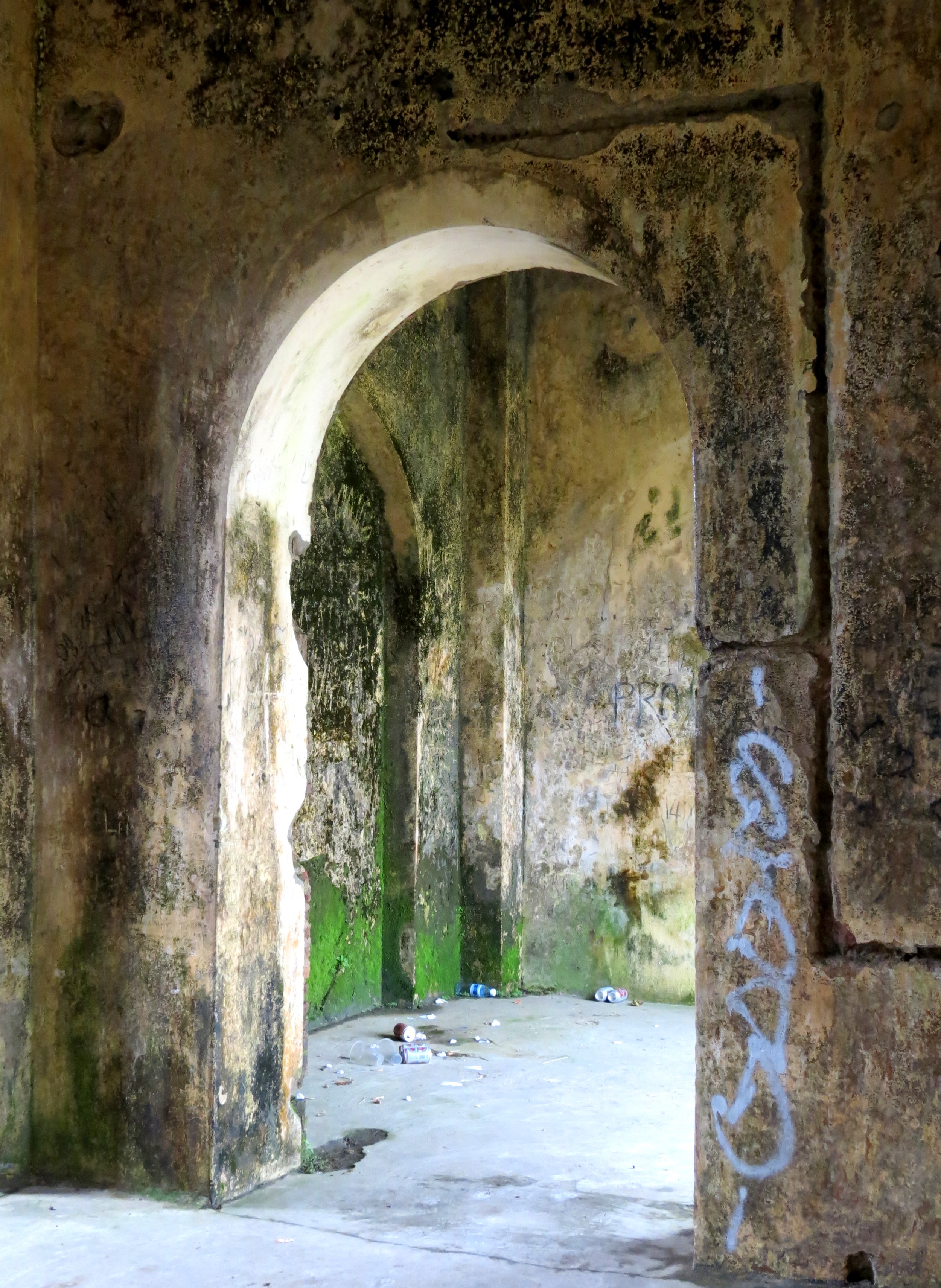

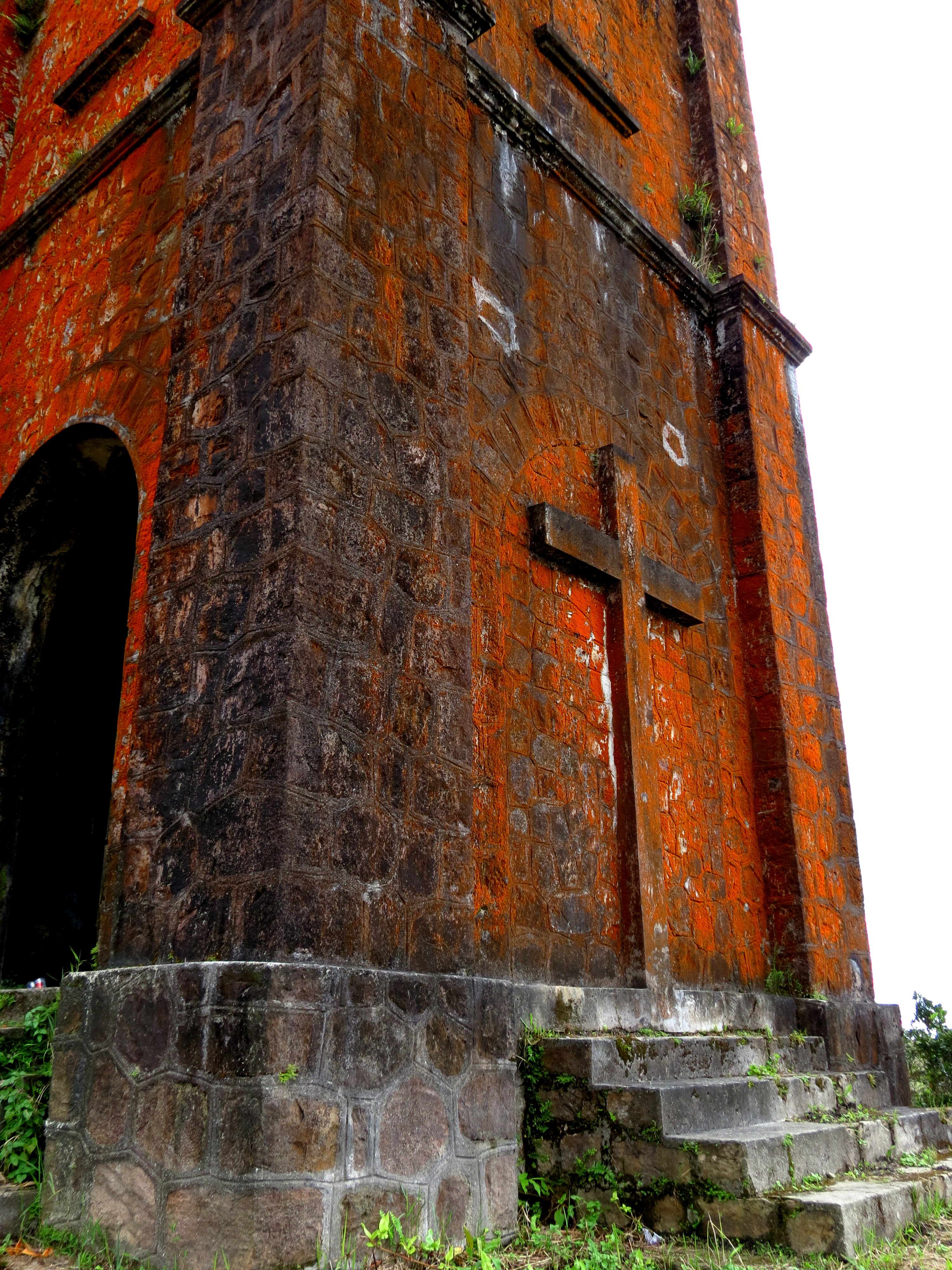
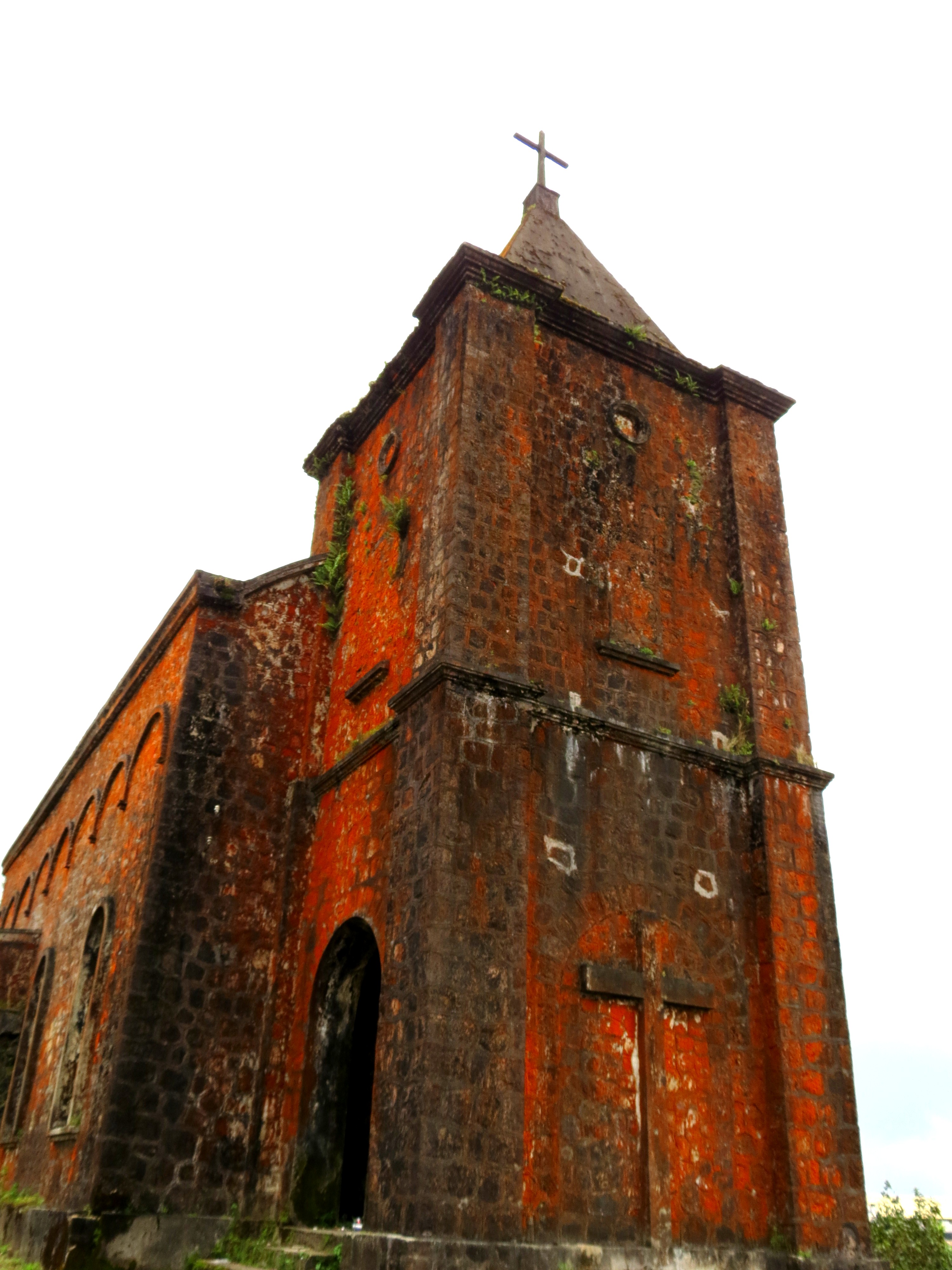

It’s become something of a dumping ground for the flotsam and jetsam of visiting kids – littered with Anchor Beer cans and the detritus of some serious partying. Look past the rubbish and the graffiti and it’s actually quite beautiful – somehow made moreso by the ravages of a century’s merciless weather.
The older buildings up on Bokor have been cloaked in a quite unusual moss/lichen that glows brilliant orange. At first I thought it was orange paint, but it feels like velvet and gives a quite extraordinary hue to the whole place.
The little Buddhist wat (temple) that sits incongruously behind the monstrosity that is the casino – is breathtaking. Perched right at the edge of a cliff, it is a working wat with monks coming and going, it was very beautiful with the mist rolling around the mountain – a noticeable drop in the temperature made the experience all the more noteworthy!
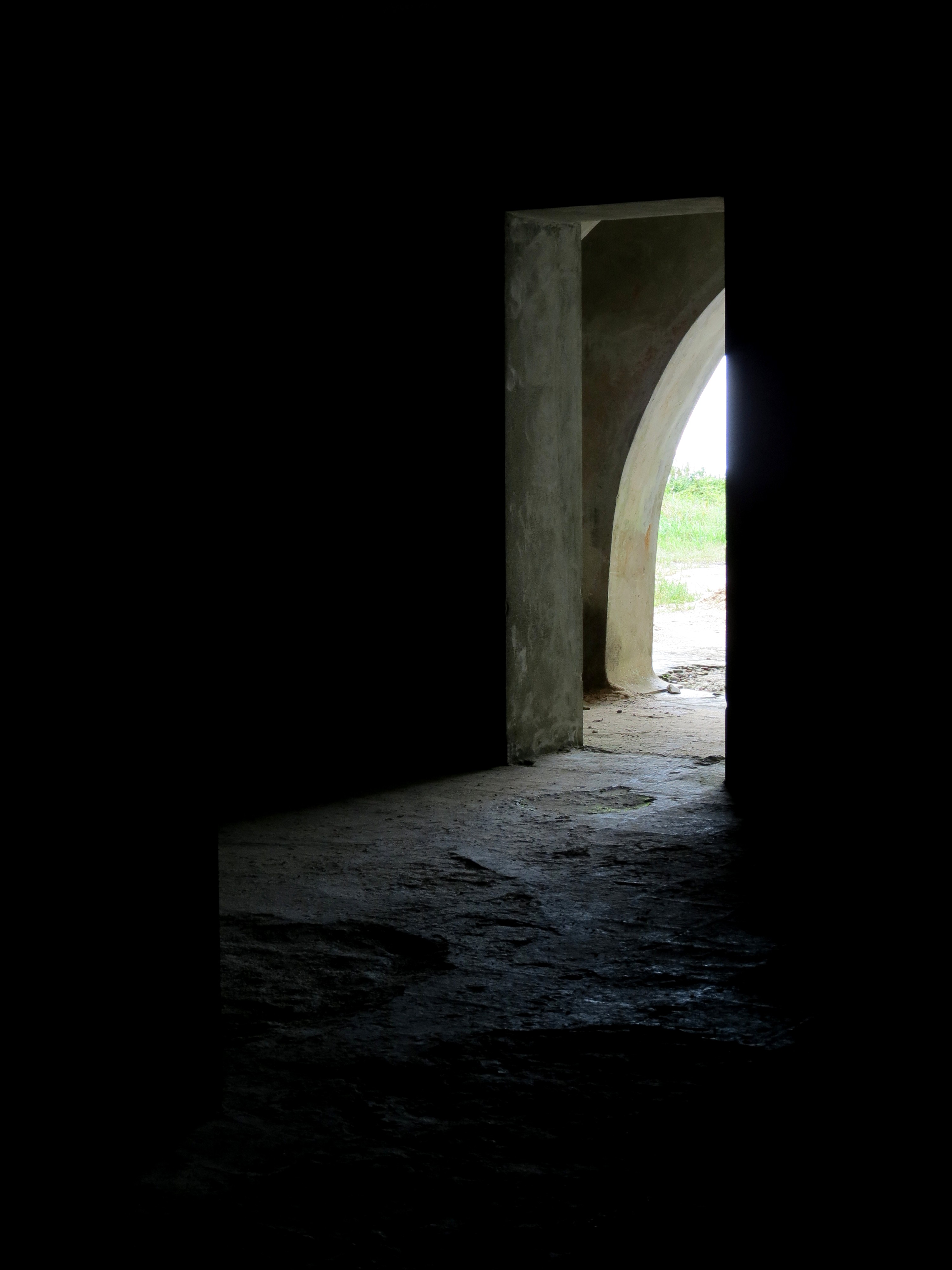
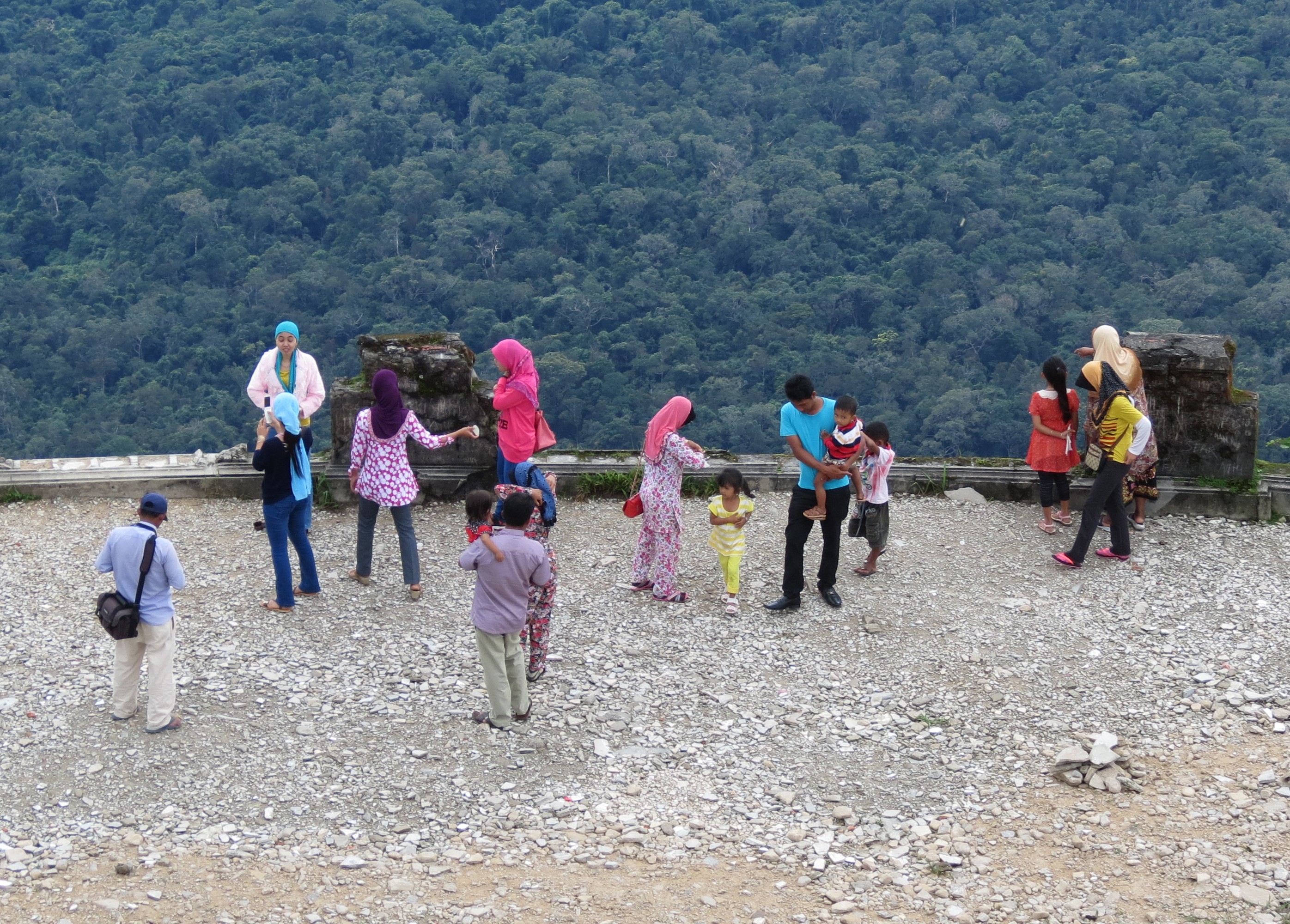
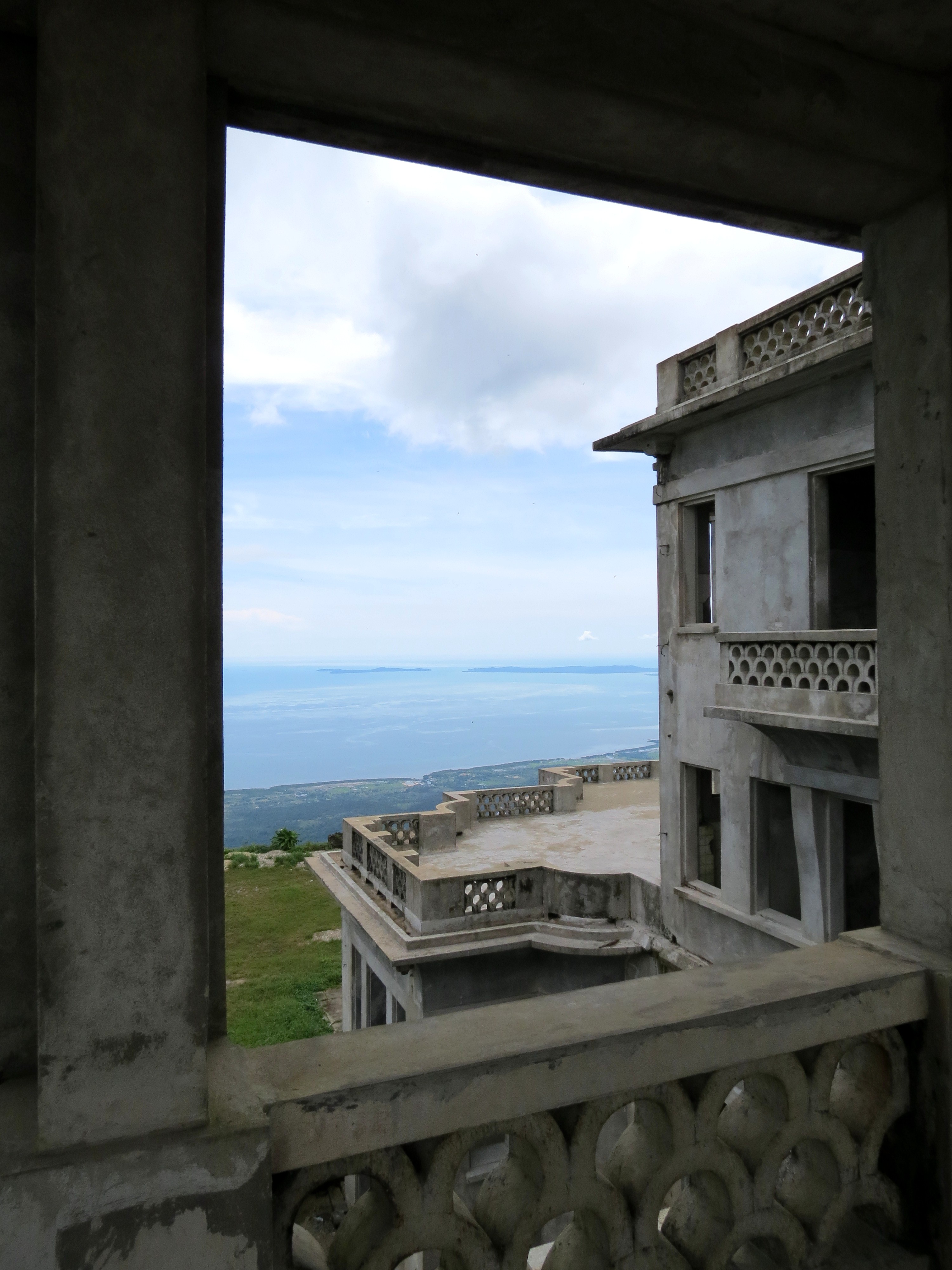
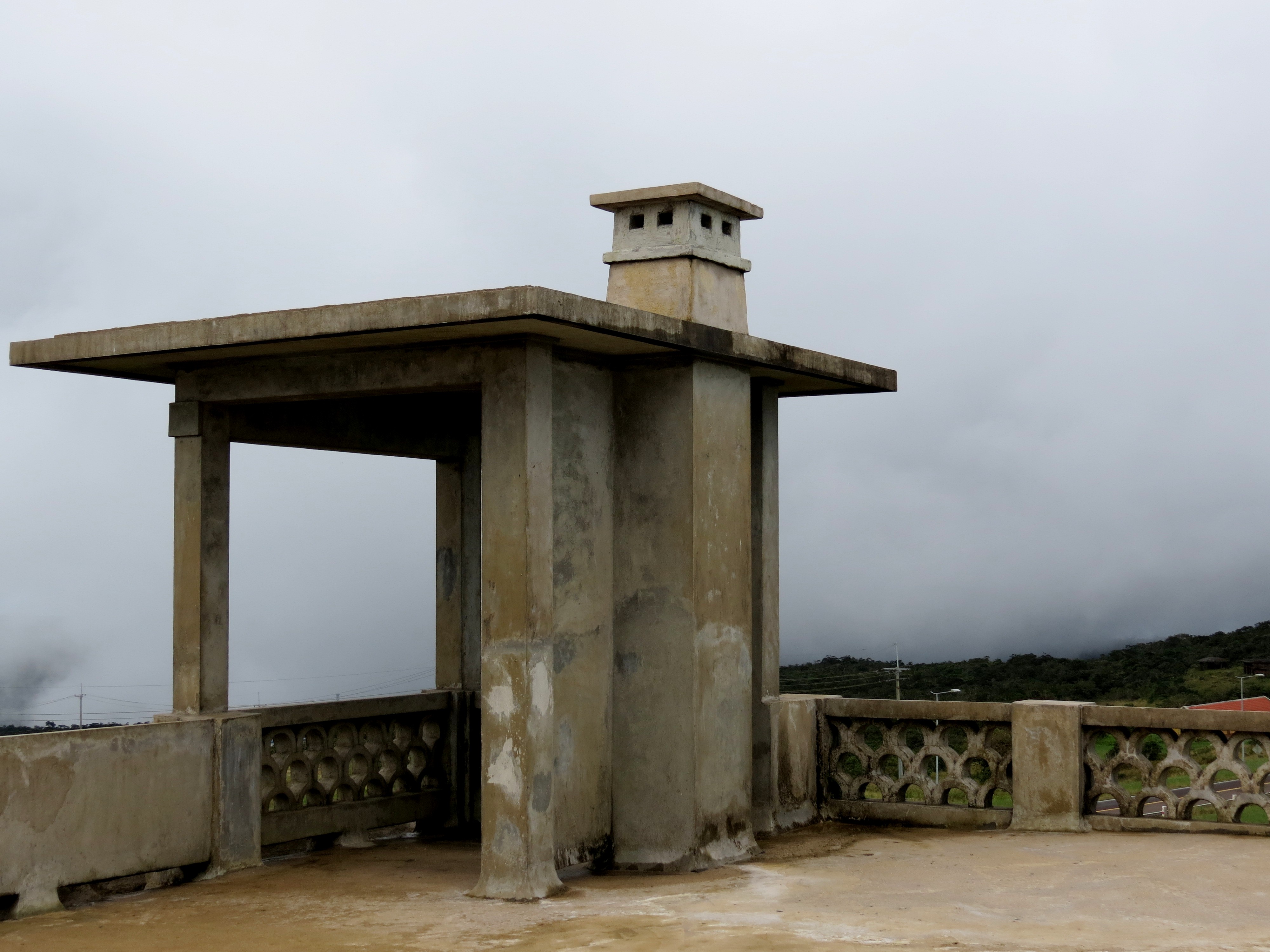
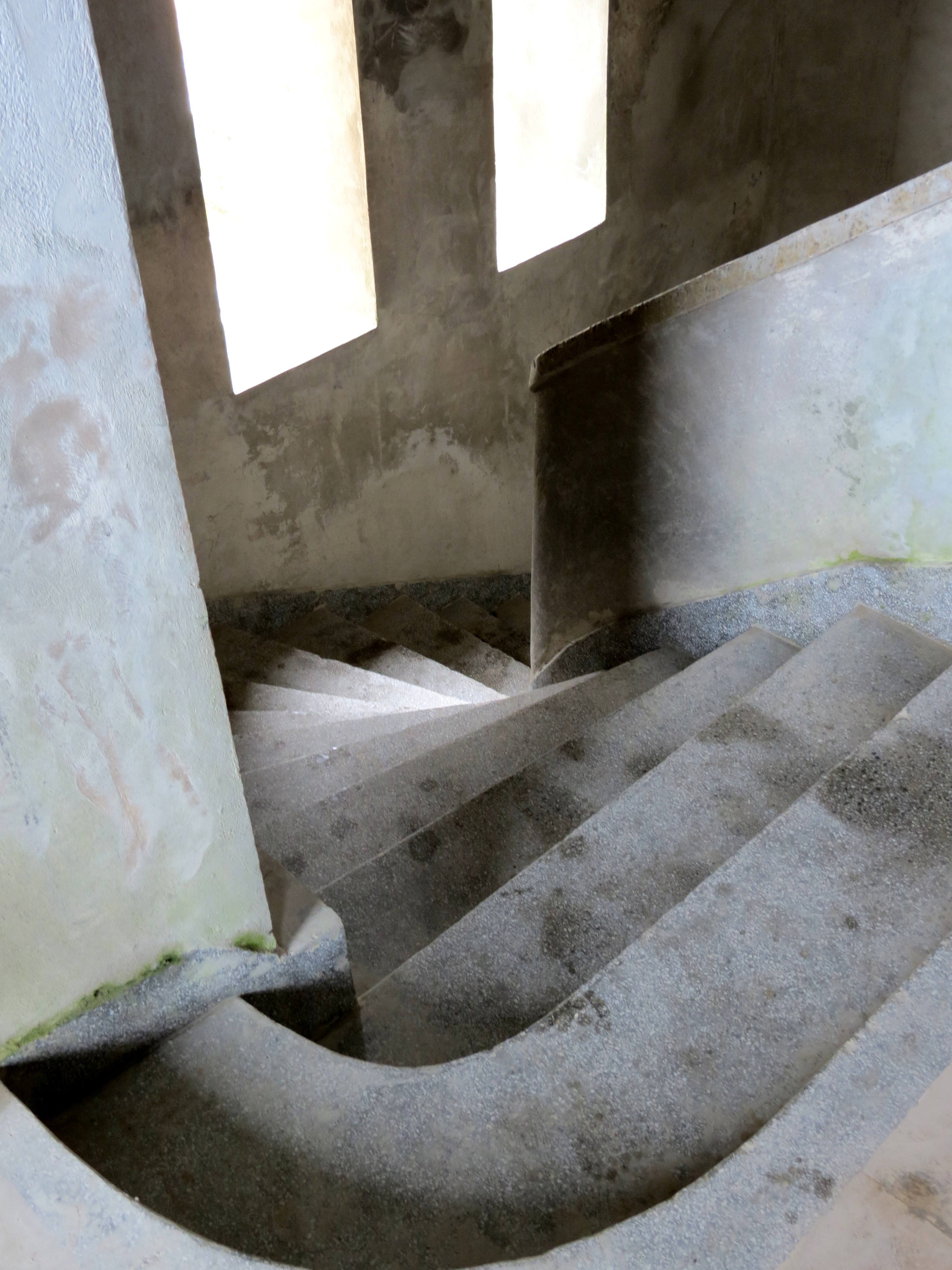
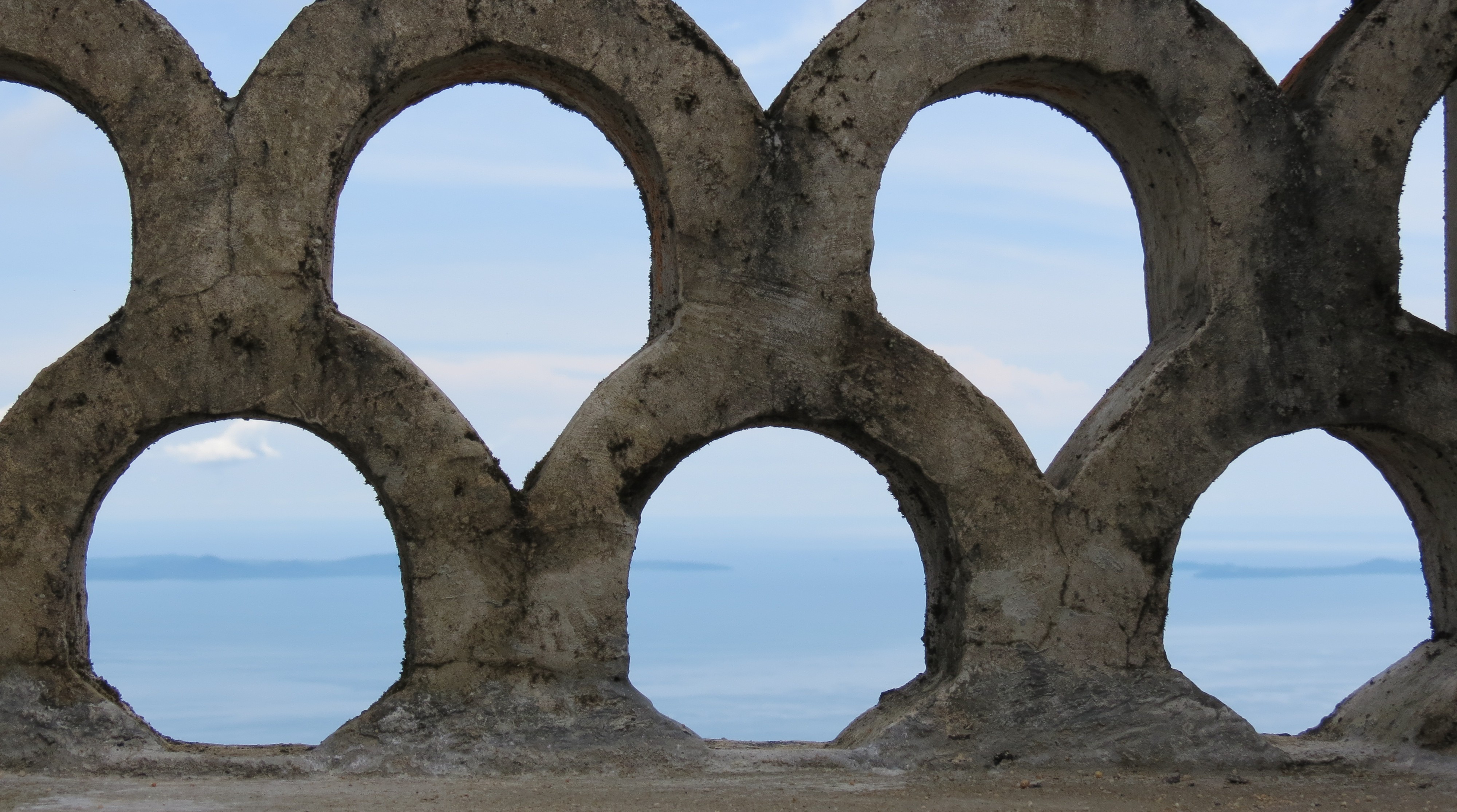
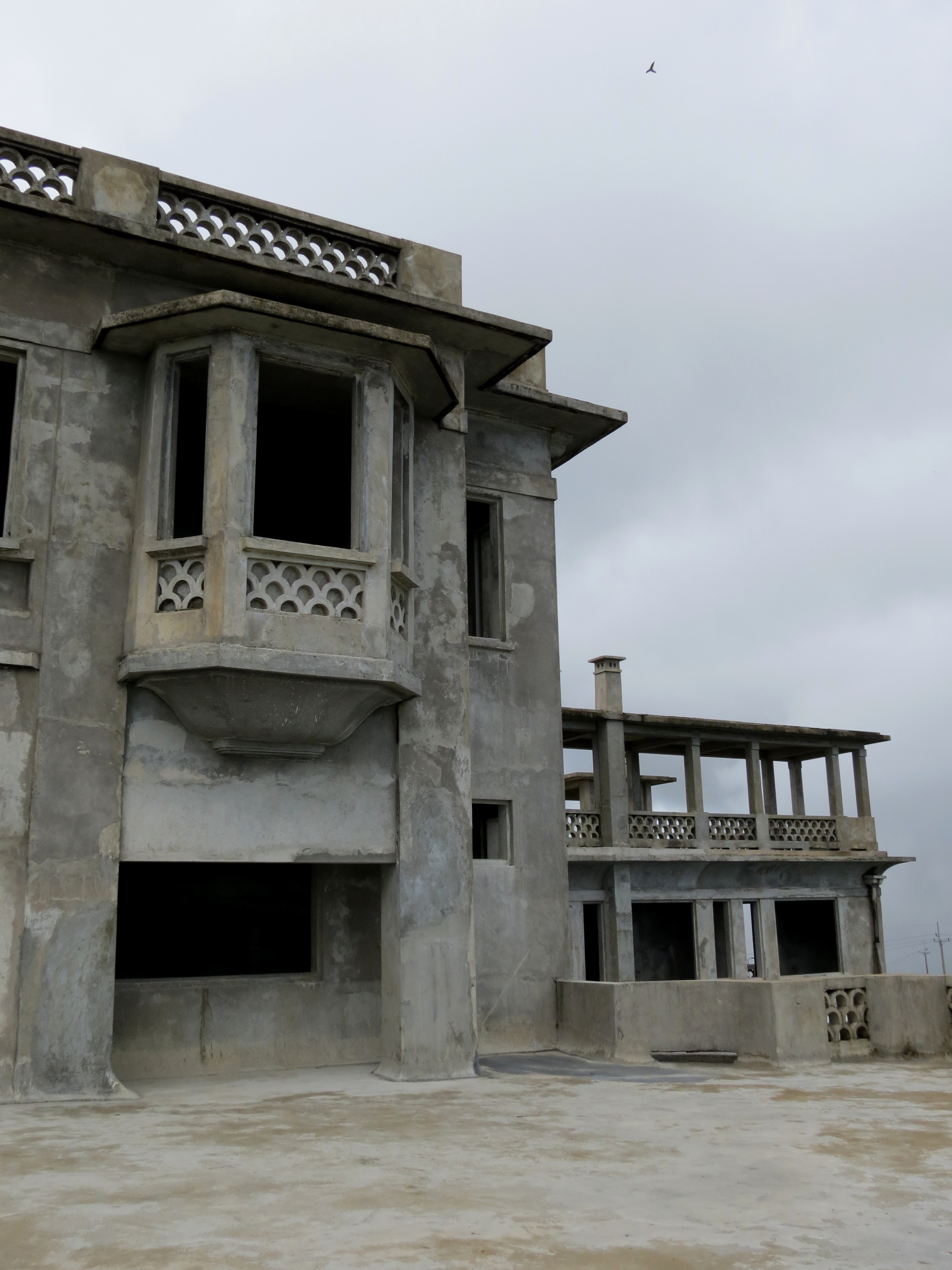
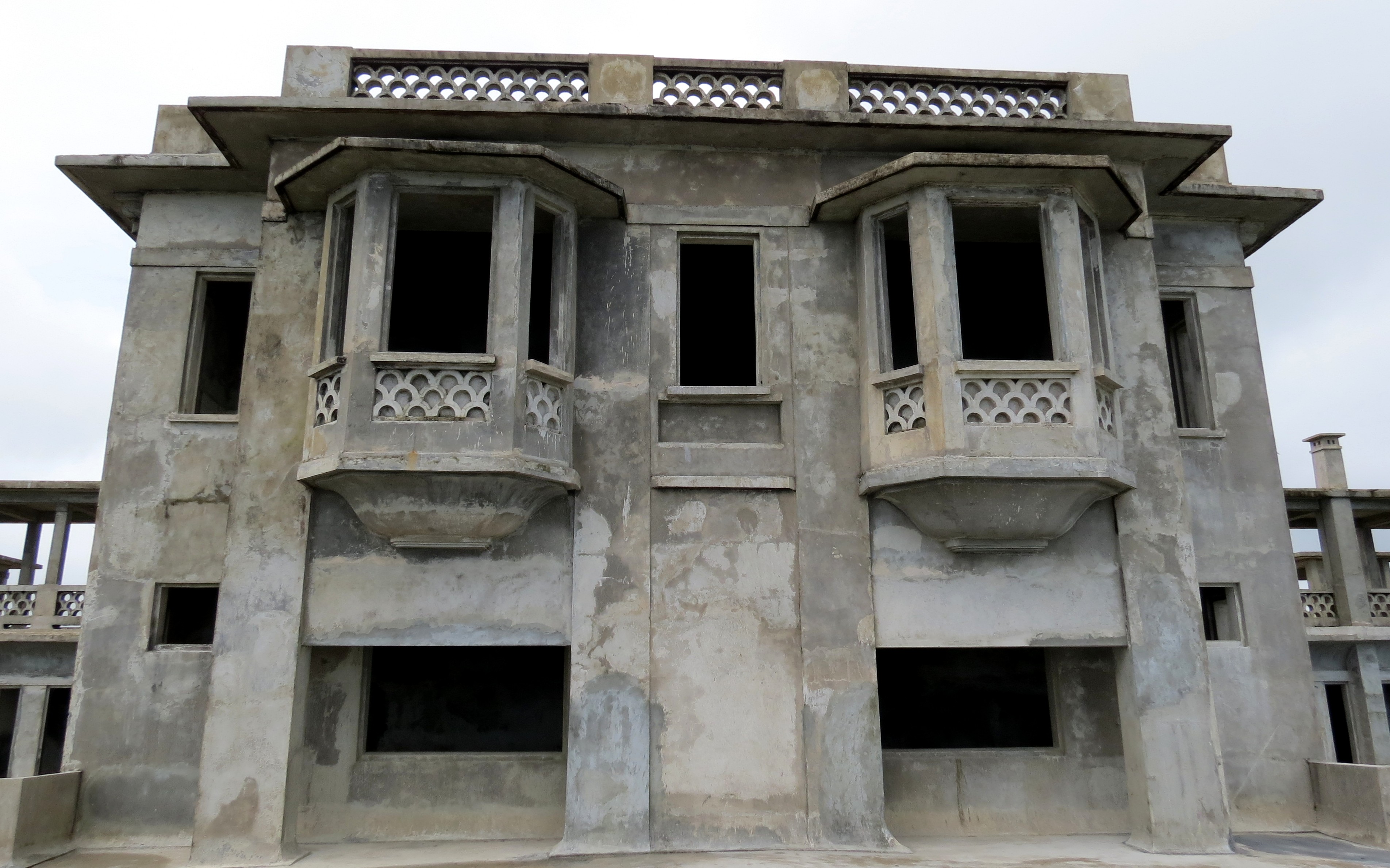
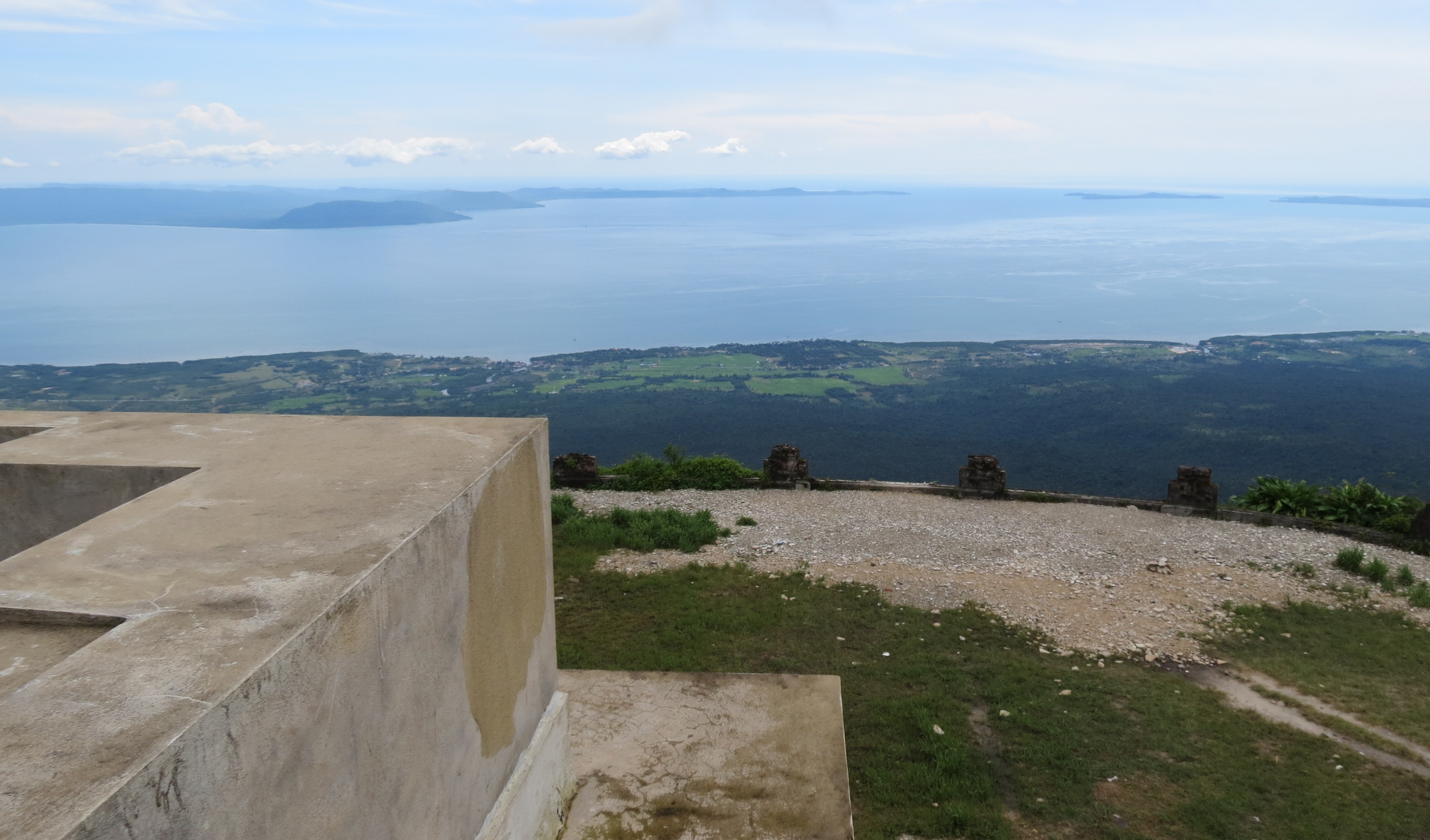
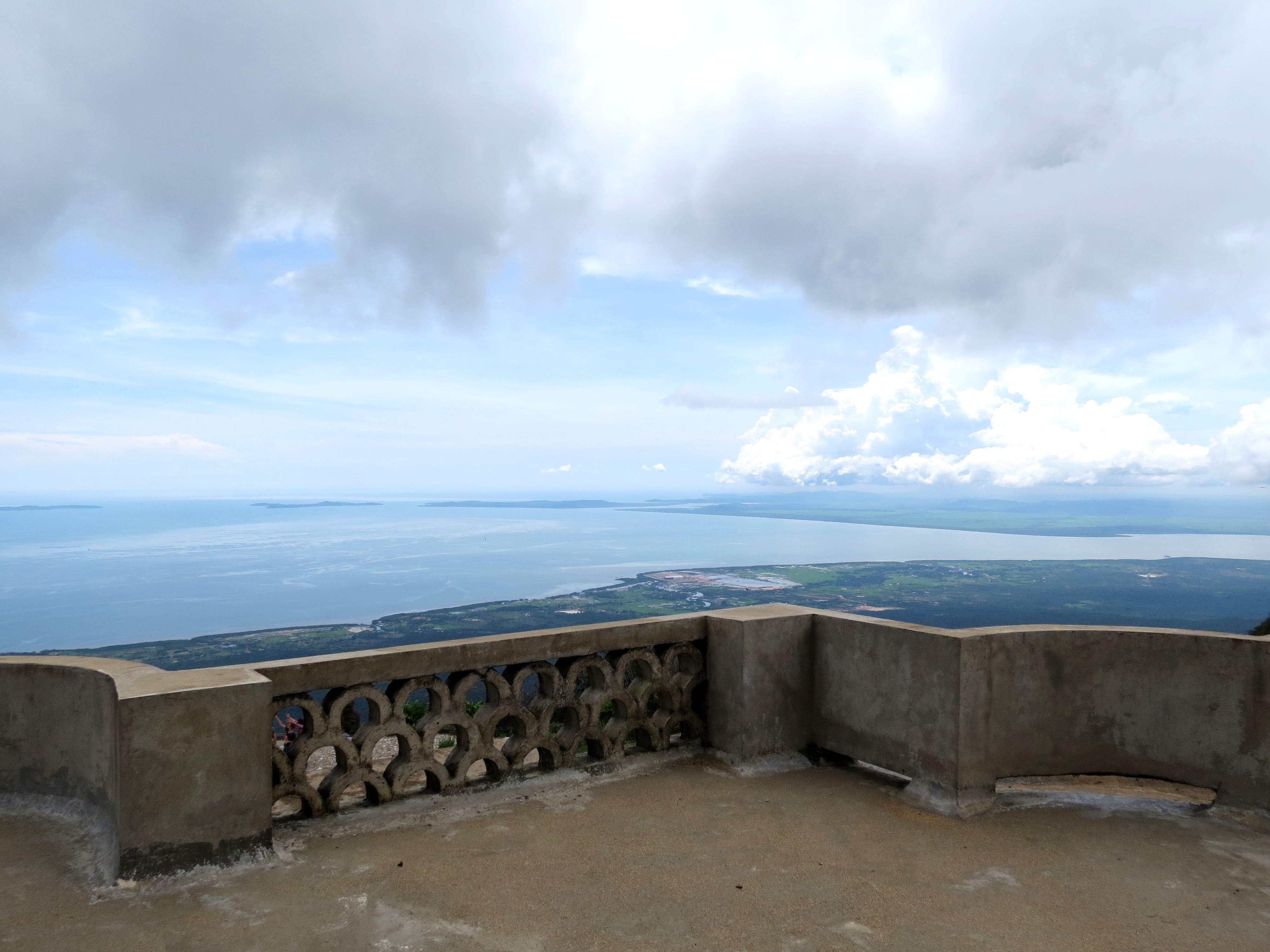
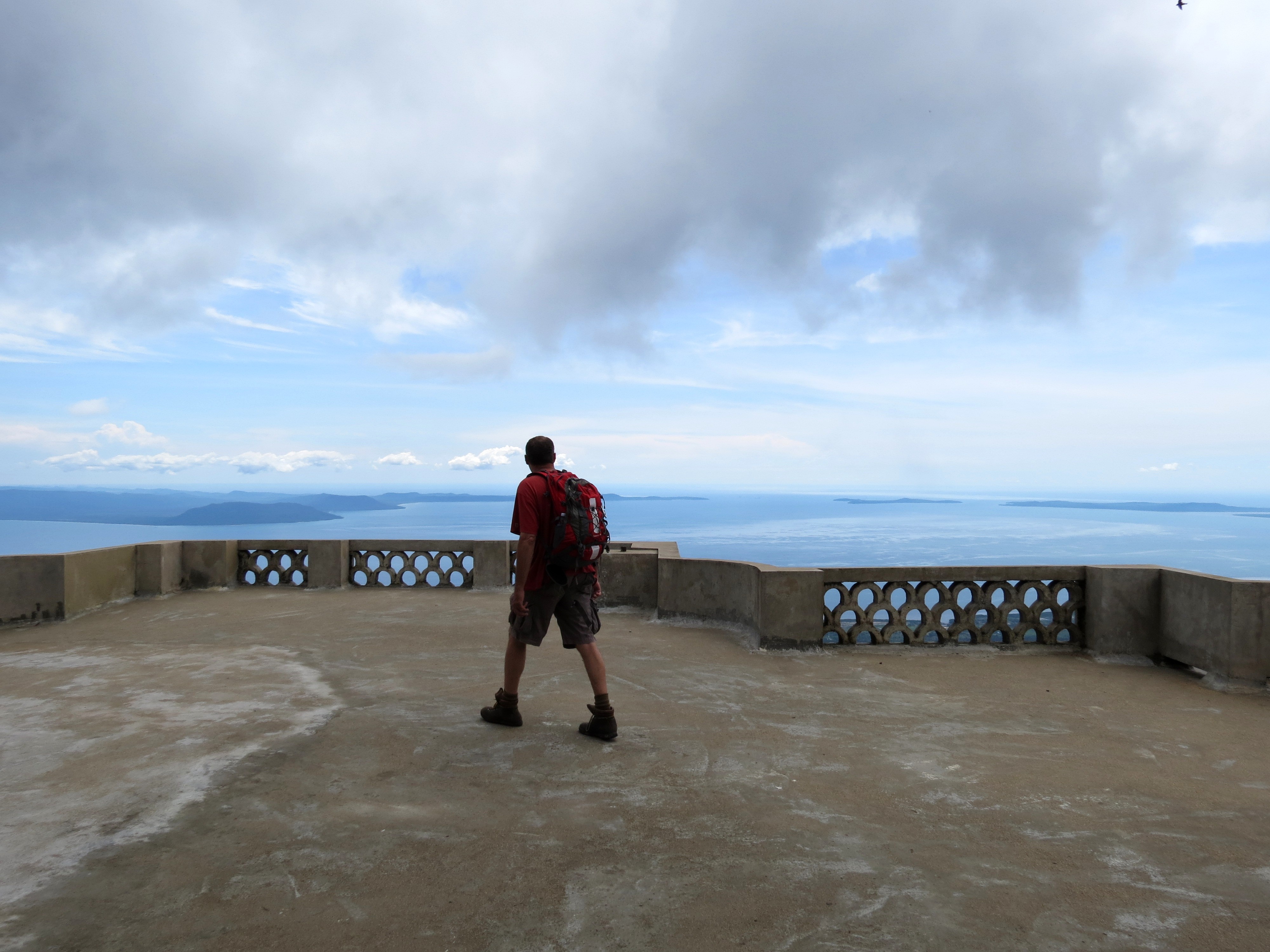
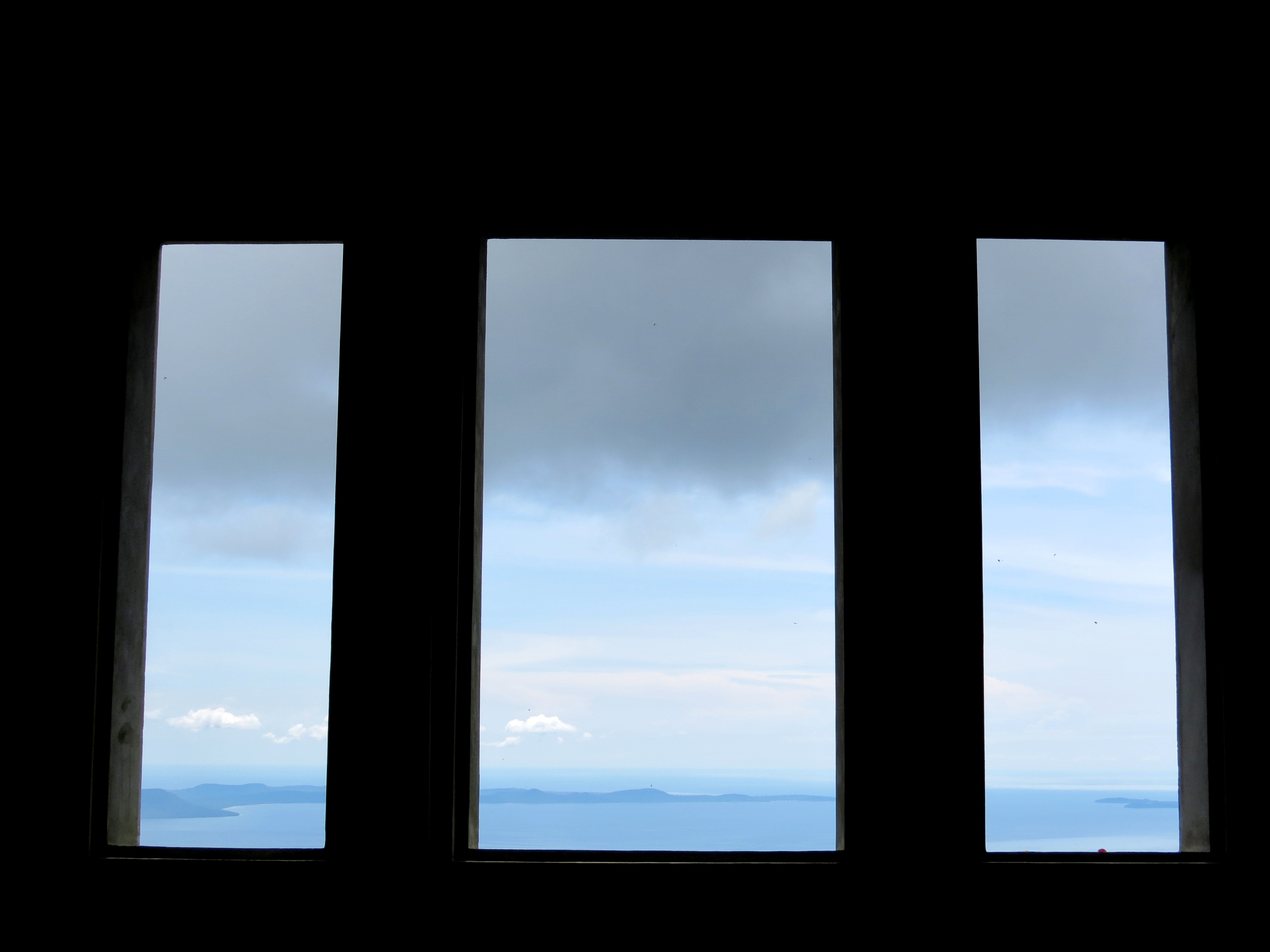
Also atop Bokor Mountain is an imposing building with a sinister history that paints the place as grey as its facade. Originally built (or almost built – it was never finished) as a casino and hotel, this abandoned building was used as a stronghold for the Khmer Rouge during their murderous reign in the 70s. It’s a veritable fortress – again, perched right at the edge of a cliff, with 360 degree views. It would be quite breathtaking as a hotel but equally effective as a stockade. Recent work on the place has covered up all the bullet holes, apparently, but just knowing its history makes it a sombre place indeed.



 Jen Cowley